|
Titel
-
MONU magazine on urbanism #12
Technische
Angaben
-
144 S., 27x20 cm, ISBN/ISSN 1860-3211
Broschur, verschiedene Papiere.
ZusatzInfos
-
Luxury Space By Jason Lee; The World According to Mr. Reds By Doreen Jakob; The Shelter Category By Mammoth (Stephen Becker and Rob Holmes); How the City of Broad Shoulders Bought its Growth Spurt By Karl Johann Hakken; Residential Developers and Investors in Central Europe: Boom and Bust By Maximilian Mendel; Pyongyang in a New Era By Yim Dongwoo; Casino City State By Rustam Mehta and Thomas Moran; Solidere, Inc., or Downtown Beirut By Carol Moukheiber; Real High - The Desire for the Real in Urban Real Estate By McLain Clutter; Real Creativity: A Case for Ethical Freedom in Architecture By Randall Teal; Life without Architects - Interview with Magriet Smit By Bernd Upmeyer; The New York Value Exchange By Joyce Hwang; Real Big - Interview with Bjarke Ingels By Beatriz Ramo; Magic Realism - A New Skyline for Rome By Simone De Iacobis; Business Park De Hoef Revisited 1998-2008 By Arjan Harbers (Topotronic); Brand New Landlords By Daan Roggeveen and Michiel Hulshof; Market Value(s) By STAR; Living on the Edge By Bas Princen; Why should a Developer read Aristotle By Marta Relats; Unbuilt Rotterdam By ZUS [Zones Urbaines Sensibles]; Rotterdam is a Whore - Interview with Andre Kempe By Beatriz Ramo and Bernd Upmeyer; To Build or not to Build By MVRDV
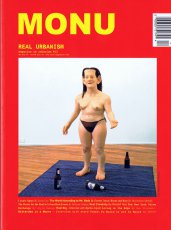
Just like the "Ideal Woman" on the cover of this issue on Real Urbanism - a sculpture by the Brooklyn based artist Tony Matelli - most of our cities are shaped by a particular set of values that does not necessarily lead to high quality urban spaces, but instead to scary, ethically unacceptable and distorted forms. As the "Ideal Woman", so "Ideal Cities" can easily end up only fulfilling the wishes and dreams of a powerful minority, but neglect the needs of most of the other people. Jason Lee, one of the contributors to this issue, that deals more with "Real Estate" Urbanism rather than with Actual or Factual Urbanism, uses this sculpture in his article "Luxury Space" to display the consequences that can occur when a financially powerful elite develops real estate projects in the city of Shanghai merely to accommodate their consumerist desires. Cities have been reduced to machines for making and spending money as Stephen Becker and Rob Holmes put it in their piece "The Shelter Category". Especially in Central European countries, where two decades ago the state-controlled economy changed into a market-economy, developers are driven by pure profit rather than by a genuine desire or even awareness of sustainable neighbourhoods and city development as Maximilian Mendel describes in his text "Residential Developers and Investors in Central Europe: Boom and Bust". But blaming only the financial elites and the real estate industry for the prevailing urbanism of mediocrity would be too easy. For successful urban planning, cities depend on private financing as Carol Moukheiber points out in her contribution "Solidere, Inc., or Downtown Beirut", where a productive collaboration between a corporate and a cooperative party led - although heavily criticised and carried out in a kind of pseudo democratic Berlusconian way - to prosperous results. In the case of Rotterdam, where the municipality actually cares very little about the city, real estate developers seem to be even more concerned about the quality of urban spaces than the city itself, as stated by Andre Kempe in an interview with us entitled "Rotterdam is a Whore". To halt the process by which the built-up form of our cities continues to be mainly driven by practical concerns such as efficiency, profit, and self-promotion, Randall Teal proposes in his piece "Real Creativity: A Case for Ethical Freedom in Architecture" that architects should become developers themselves. But how many architects would be able and interested in doing that? Magriet Smit, a Rotterdam based real estate developer, explains in the interview "Life without Architects" that she actually tries more and more to avoid working with planners and rather collaborates directly with construction companies as they share a greater understanding of their profession. But to prevent our cities from turning into monstrous "Ideal Cities", as perverted as the "Ideal Woman", all the parties involved that are shaping the cities - the developers, the municipalities and the planners - have to accept their interdependencies, and have to try to understand the different interests of each party and have to dare to navigate into unknown territory as Bjarke Ingels concludes in an interview with us entitled "Real Big".
Text von der Webseite
|
Titel
-
Zines #2 1976-1979 - Künstlerzeitschriften aus der Sammlung Hubert Kretschmer, München Archive Artist Publications
Technische
Angaben
-
16 S., 37x29 cm, Auflage: 1.000, 2 Stück. ISBN/ISSN 9783928804714
Blätter lose ineinander gelegt, farbig gedruckte Zeitung
ZusatzInfos
-
kostenlose Zeitung zur Ausstellung im Zentralinstitut für Kunstgeschichte in München vom 07.12.2013 - 31.01.2014,
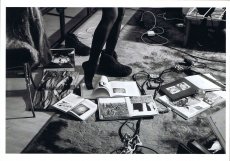
mit Texten von Rüdiger Hoyer, Daniela Stöppel, Ulises Carrión und Hubert Kretschmer, alle Abbildungen in Farbe. Johannes Bissinger
|
Technische
Angaben
-
144 S., 30x22 cm, Auflage: 350, ISBN/ISSN 9781907468209
Broschur mit Klappeinband
ZusatzInfos
-
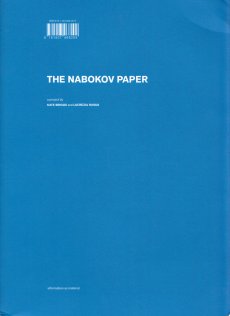
The Nabokov Paper is an experiment in novel-reading. The project takes as its starting point a now famous class taught during the 1950s by Vladimir Nabokov at Cornell University, New York State, entitled Literature 311-312: Masters of European Fiction. Nabokov’s approach to teaching literary reading was notoriously idiosyncratic. Convinced that one must teach the books themselves, not ideas or generalities, Nabokov would make diagrams of the floor plans of fictional buildings, map the routes taken by characters through the spaces of the novel, and draw items of clothing or furniture, he would also propose to track the course of a single letter, offer a visual representation of a stylistic device, and uncover what he called the mysteries of literary structures. His methods are striking for the range of gestures they call for in the name of good reading. The published Lectures on Literature (New York: Harcourt, 1980) concludes with an appendix of sample exam questions. Responding to those questions some sixty years after the fact offers a means to explore what Nabokov’s take on how to read might have to teach us today: about the novel, about how reading works across practices and disciplines, and about the past, present and future forms of literary criticism.
Text von der Webseite
|
Technische
Angaben
-
[8] S., 21x14,8 cm, 2 Stück. keine weiteren Angaben vorhanden
Postkarte, beidseitig bedruckt, braune Versandtasche mit aufgeklebter original Künstlerbriefmarke
ZusatzInfos
-
Einladung zur Ausstellung "Pieces" vom 17.03.-31.03.2018 bei Richas Digest in Köln.
|
Titel
-
EMOP - European Month of Photography 2018
Technische
Angaben
-
298 S., 27x20 cm, 3 Teile. keine weiteren Angaben vorhanden
Broschur, 3 verschiedene Covers, von Alina Simmelbauer, Herbert List und Josef Wolfgang Mayer
ZusatzInfos
-
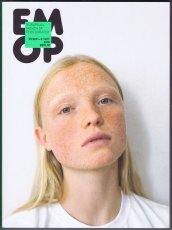
Ausstellungskatalog zum EMOP, 28.09.-31.10.2018. Der Band listet alle 115 Ausstellungen des 8. Europäischen Monats der Fotografie Berlin mit Texten und Abbildungen auf. Zudem gibt es einen Index aller teilnehmenden Künstlerinnen und Künstler.
Seit 2004 stellt Deutschlands größtes Fotofestival alle zwei Jahre die ganze Bandbreite historischer und zeitgenössischer Fotografie in Berlin vor. Museen, Kulturinstitutionen, Galerien, Projekträume, Botschaften und Fotoschulen in Berlin und Potsdam präsentieren zahlreiche Ausstellungsprojekte und Veranstaltungen, ausgewählt von einer Fachjury. Die Formate reichen von Ausstellungen im Außenraum und großen Museumspräsentationen,über Einzel- und Gruppenpräsentationen in Galerien und Projekträumen bis zu beeindruckenden Beiträgen vieler ausländischer Kulturinstitute und Botschaften sowie der städtischen Kunst- und Kulturämter.
2016 fanden erstmals zum Auftakt des Festivals die EMOP Opening Days in Kooperation mit der C/O Berlin Foundation im Amerika Haus statt, die in 3 Tagen mehr als 10.000 Besucherinnen und Besucher anzogen. Wegen des großen Erfolges finden sie in diesem Jahr erneut statt und werden von C/O Berlin kuratiert.
Text von der Webseite.
|
Copyrighthinweis: Das Copyright für die abgebildeten Publikationen bleibt bei den jeweiligen Rechteinhabern (Autoren, Künstlern, Fotografen, Gestaltern, Publizisten). Die Abbildungen und Textzitate dienen der künstlerischen und wissenschaftlichen Recherche.
Hier werden Werke dokumentiert, die sonst nur schwer oder gar nicht zugänglich wären. Wer nicht damit einverstanden ist, dass sein Werk auf dieser Webseite gezeigt wird, kann die Abbildung umgehend durch mich löschen lassen.
Für wissenschaftliche Recherchen können die großen Abbildungen auf Antrag freigeschaltet werden.
Wenn Sie als Rechteinhaber möchten, dass Ihre Abbildungen bei Klick größer gezeigt werden (Höhe x Breite = ca. 800 x 1200 Px), dann melden Sie sich bitte bei mir: