|
Technische
Angaben
-
26 S., 27,5x29 cm, Auflage: 1.000, numeriert, keine weiteren Angaben vorhanden
Drahtheftung
ZusatzInfos
-
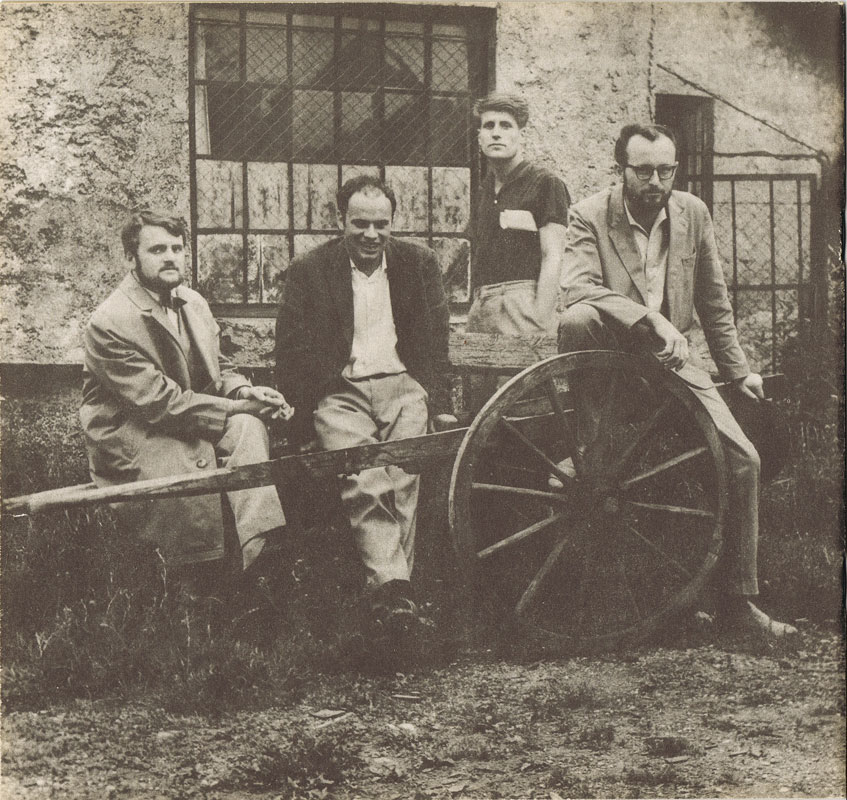
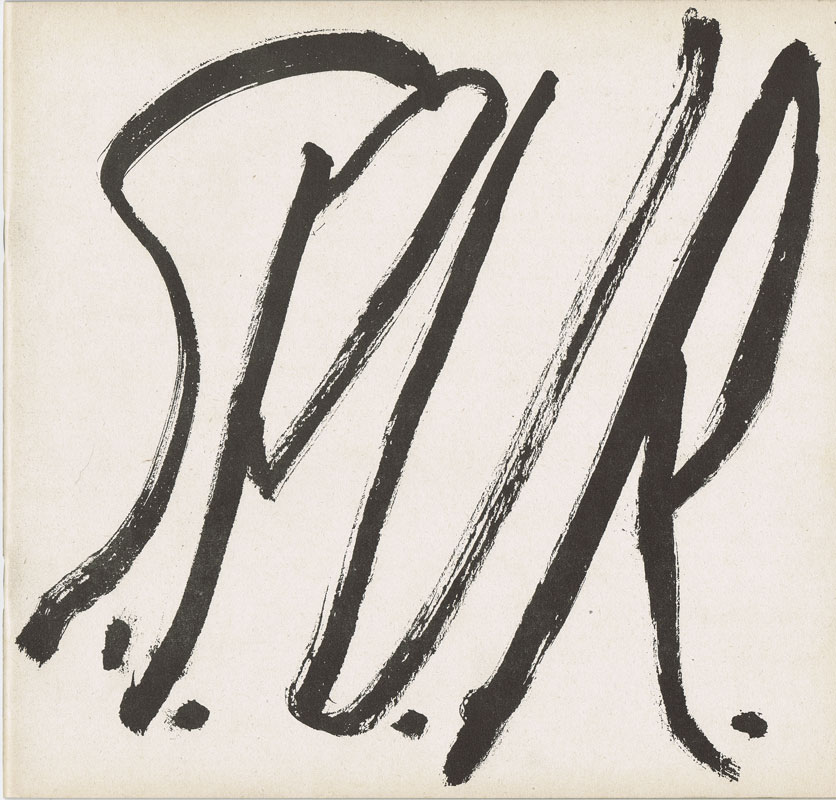
Erschienen im August 1960. Erste Veröffentlichung 17.05.1960 in Internationale Situationniste Nr. 4, Juni 1960 mit Guy Debord, Asger Jorn, Constant, Maurice Wyckaert, Pinot Gallizio, Spur u.a.
|
Technische
Angaben
-
21x14,8 cm, keine weiteren Angaben vorhanden
Karte
ZusatzInfos
-
Erscheint zur Ausstellung in der Galerie Esther Schipper, 17.01.-22.02.2020
Esther Schipper is pleased to announce Ku Lak, Matti Braun's sixth solo exhibition with the gallery. The exhibition will include 16 works from a new series of silk paintings and approximately 25 new glass works, the latter presented on three circular plinths designed by the artist. Matti Braun's practice is characterized by a constant negotiation between concrete references and general allusions, between poetic ephemerality and an uncanny sense of visceral immediacy. His work investigates the unexpected, often little known, effects of cross-cultural dynamics, making visible patterns of artistic migrations and cultural misrecognitions.
Text von der Webseite
|
Technische
Angaben
-
[132] S., 28x21 cm, Auflage: 1.000, ISBN/ISSN 9781908806017
Drahtheftung, eingelegt ein Werbeflyer
ZusatzInfos
-
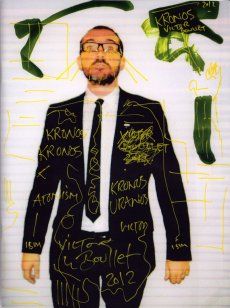
Estate Of is the new publication series from Antenne Publishing. Published twice a year in a magazine-like stapled format, each edition is given to a single artist working with photographs as a space to realise projects. Estate Of aims to become a meeting point between an informal physical object, and a substantial body of work from an individual artist.
Kronos by Victor Boullet is the first publication in the Estate Of series.
Victor Boullet’s title refers to the Greek god Kronos, a deity known for its doublesidedness, a concept closely connected to his project The Institute of Social Hypocrisy. The publication Kronos is a means to carry his work forward into a newer form of expression, whilst maintaining a constant sense of dichotomy.
Text von der Webseite
|
Technische
Angaben
-
[180] S., 24,2x17,5 cm, ISBN/ISSN 9788890981760
Lose Einzelblätter, mit schwarzem Gummiband zusammengehalten, Cover aufklappbar und mit Ausstanzung. Zur Mitte länger werdender Schnitt.
ZusatzInfos
-
Dritte Auflage.
Initially published in 2014 as a fanzine, PEAK documents the Dolomites, originally known as the pale mountains. The book meditates upon the dualism between apex and nadir and the constant alternation of both. By folding double sided prints, each spread becomes a juxtaposition of two separate peaks, each joining to the next one and forming a cycle, from night to day, from summer to winter, and back. Award: Finalist Lucie Photo Book Prize 2017
Text von der Website.
|
Technische
Angaben
-
[72] S., 14,8x10,5 cm, Auflage: 100, keine weiteren Angaben vorhanden
Digitaldruck S/W, Softcover, Klebebindung, mit Bauchbinde
ZusatzInfos
-
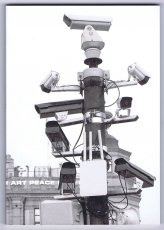
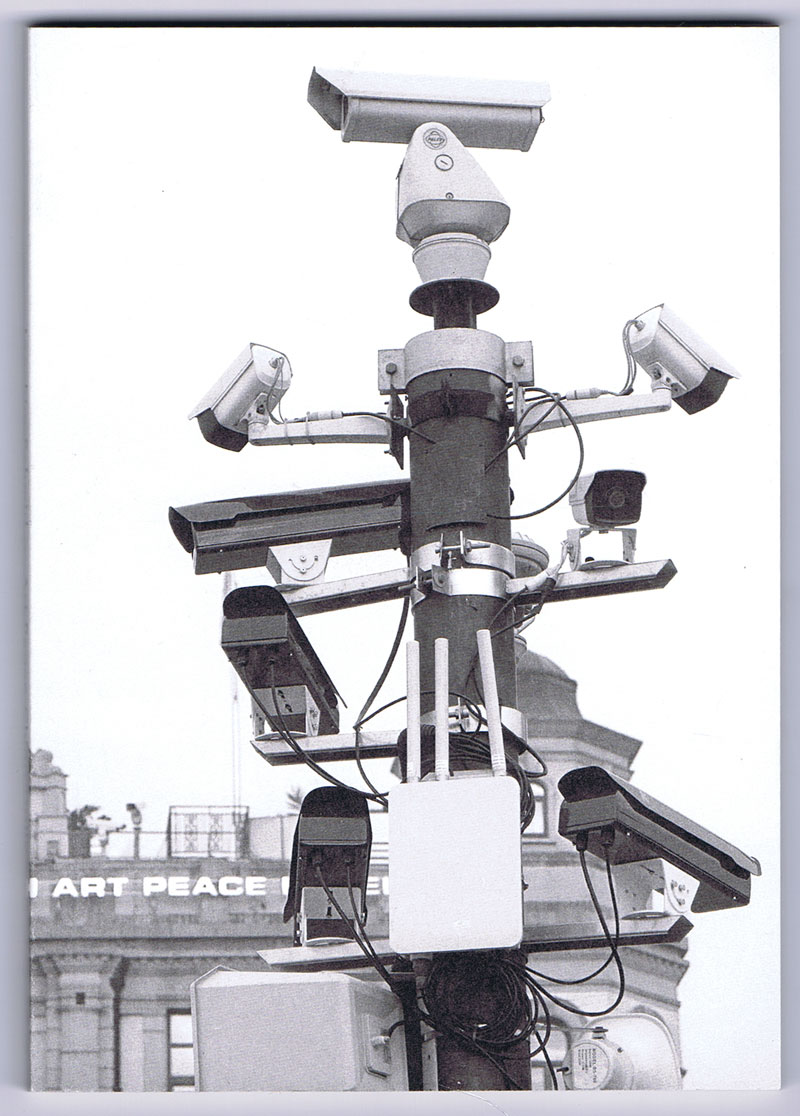
Fotografien während eines Aufenthalts im Art Peace Hotel Shanghai. Schlagzeilen aus der "China Daily", 5/6 2018. “In springtime 2018 I spent a few weeks inside the modern world’s dystopian dream, living under constant video surveillance and being identified by face recognition software wherever I went. The authorities aim to control everybody and everything with an ever-growing number of cameras. The daily paper informed me of whatever anomalies the omnipresent cameras recorded and also what had escaped them. Art Peace China Daily is the report of my sojourn in this country.”
Text von der Webseite
|
Titel
-
The Collection for the poor Collector
Technische
Angaben
-
48 S., 10,5x7,4 cm, ISBN/ISSN 9783945900154
Drahtheftung, 4-farbig, Karte eingelegt, einseitig bedruckt, mit Sticker zugeklebt (geöffnet)
ZusatzInfos
-
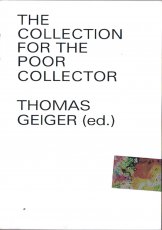
In der Publikation „The Collection for the poor Collector“ trägt Thomas Geiger 21 Werke von verschiedenen internationalen Künstlerinnen und Künstlern zusammen. Alle vorgestellten Werke werden durch neue, zum Teil experimentelle ökonomische und verbreitungstechnische Strategien an die interessierte Sammlergemeinde verkauft; fernab der gewohnten Pfade des traditionellen Kunstmarktes.
Diese exklusive Zusammenstellung wurde von der Arbeitsweise des Autors („I want to become a millionaire“) und seiner Lektüre des Edition Taube Klassikers „Confessions of a Poor Collector“ von Eugene M. Schwartz inspiriert.
Text von der Webseite.
|
Technische
Angaben
-
[16] S., 20,5x14,7 cm, keine weiteren Angaben vorhanden
Drahtheftung, Schwarz-Weiß-Fotokopien, Umschlag aus farbigem Papier
ZusatzInfos
-
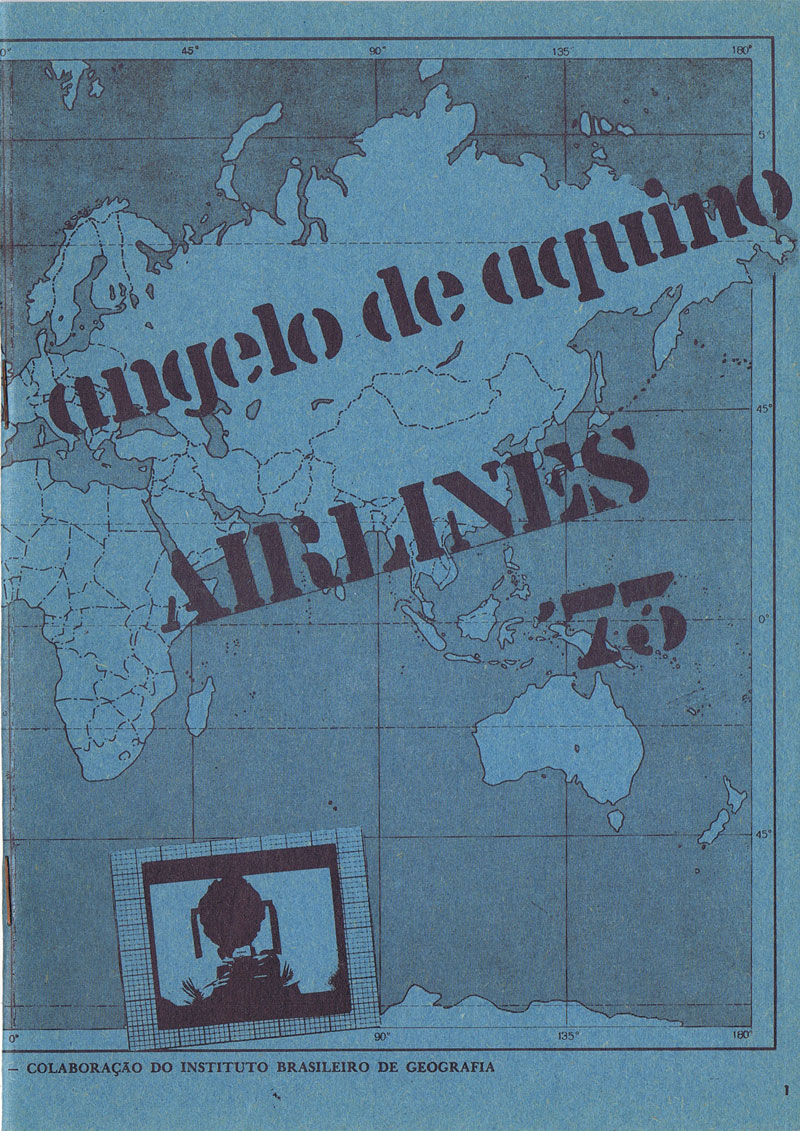
Constant situations, in Zusammenarbeit mit dem Instituto Brasileiro de Geografia.
|
Titel
-
APE 24 - Terribly Awesome Photo Books
Technische
Angaben
-
[64] S., 37x30 cm, Auflage: 1.000, 2 Stück. ISBN/ISSN 9789490800093
Blätter lose zusammengelegt, einmal gefaltet, in transparenter Kunststoffhülle
ZusatzInfos
-
For several years, Paul Kooiker and Erik Kessels have organized evenings for friends in which they share the strangest photo books in their collections. The books shown are rarely available in regular shops, but are picked up in thrift stores and from antiquaries. The group’s fascination for these pictorial non-fiction books comes from the need to find images that exist on the fringe of regular commercial photo books. It’s only in this area that it’s possible to find images with an uncontrived quality. What’s noticeable from these publications is that there’s a thin line between being terrible and being awesome. This constant tension makes the books interesting. It’s also worth noting that these tomes all fall within certain categories: the medical, instructional, scientific, sex, humour or propaganda. Paul Kooiker and Erik Kessels have made a selection of their finest books from within this questionable new genre.
Text von der Verlagswebseite
|
Titel
-
The Most Dangerous Game - Der Weg der Situationistischen Internationale in den Mai 68
Technische
Angaben
-
[8] S., 20x10,4 cm, keine weiteren Angaben vorhanden
Flyer mehrfach gefaltety<
ZusatzInfos
-
Flyer zu der Ausstellung 27.09.—10.12.2018.
Zwischen 1957 und 1972 konzipierte die Situationistische Internationale (S.I.) zunächst eine „Revolutionäre Front in der Kultur“ und verlegte ihre Propaganda dann auf das politische Feld. Mit den Methoden des Spiels übte die Bewegung grundsätzliche Kritik am Spektakel der Warengesellschaft. In einer Zeit, in der marktwirtschaftliche Prinzipien zunehmend alle Lebensbereiche durchdringen, regt The Most Dangerous Game eine Neubetrachtung der Jahre an, in der die S.I. ihre Kritik formulierte.
In Bezug auf eine verschollene Collage des S.I.-Mitbegründers Guy Debord erinnert der Ausstellungstitel einerseits an den revolutionären Ernst, mit dem die S.I. die Auseinandersetzungen der Nachkriegszeit radikalisierte. Andererseits betont er das Element des Spiels, das sie auf all ihren Wegen umtrieb. Als „Spielraum“ dienten ihnen die Großstadt und das Alltagsleben. Hier suchten sie die Konfrontation mit dem bürgerlichen System – ästhetisch durch eine „Konstruktion von Situationen“, theoretisch durch genaue Analysen der modernen Warengesellschaft.
Text von der Webseite
|
Technische
Angaben
-
292 S., 24x17 cm, ISBN/ISSN 9783868741049
Broschur, Schwarz-Weiß-Illustrationen
ZusatzInfos
-
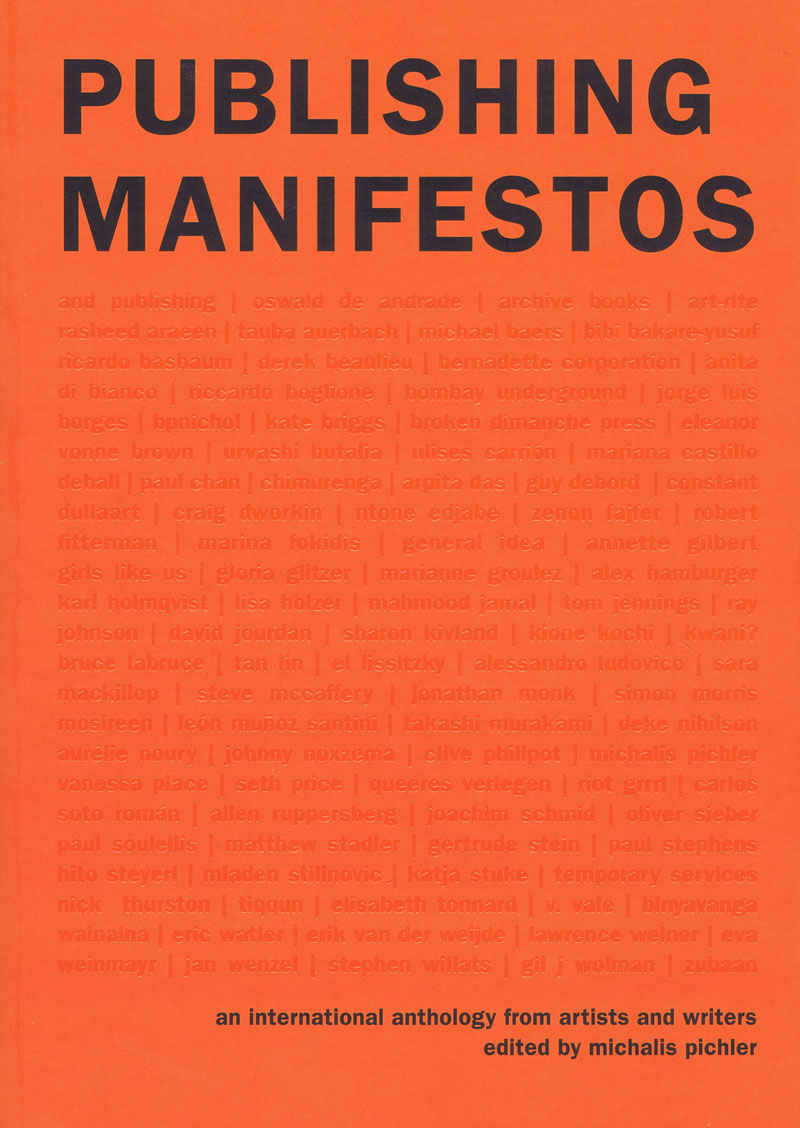
Miss Read: The Berlin Art Book Fair is celebrating the 10th year of its existence by bringing together 263 exhibitors and with the publishing of an anthology called »Publishing Manifestos«. »Publishing Manifestos« features key texts of critical engagement with publishing from protagonists of the field. The book also features a comprehensive WHO IS WHO of publishers, as they showed up in 10 years Miss Read, with 600 separate entries, as well as information about activities of Miss Read since its inception in 2009. Text von der Webseite
Mit Eintrag Archive Artist Publications, S. 225
|
Titel
-
MONO.KULTUR #45 Richard Price - New York A.M.
Technische
Angaben
-
52 S., 20x15 cm, ISBN/ISSN 18617085
Drahtheftung, Titel in Silberprägung auf dem Cover, Text und Fotografien auf verschiedenem Papier gedruckt
ZusatzInfos
-
When it comes to research, Richard Price adopts a hands-on approach: hanging out in different neighbourhoods, talking to strangers and going for ride-alongs with cops to see a darker side of the city. In many ways, it is this wide-eyed curiosity that allows his books to be read as time capsules of a New York in constant flux, revealing an uncanny understanding for knowing exactly what people want, need, envy and resent about the cities they inhabit. In a conversation peppered with anecdotes and bebop, Richard Price talked to mono.kultur about the need to live in order to write, working for Hollywood, and why hanging out is a professional matter. Visually, the conversation with Richard Price found its perfect sparring partner in a selection of images by cab driver turned photographer Joseph Rodriguez. And, just between us, we are proud to feature our very first ever foil embossed cover, in the honourable tradition of pulp novels.
Text von der Website.
|
Titel
-
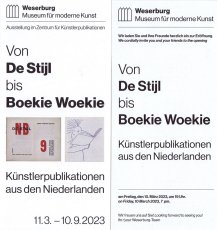
Von De Stijl bis Boekie Woekie. Künstlerpublikationen aus den Niederlanden
Technische
Angaben
-
21x10 cm, 4 Teile. keine weiteren Angaben vorhanden
Faltkarte und Flyer, in Briefumschlag
ZusatzInfos
-
Zur Ausstellung im Zentrum für Künstlerpublikationen 11.03.2023-10.09.2023
Die Ausstellung umfasst mehr als 100 Jahre niederländischer Kunst: Den Anfang macht die De Stijl-Bewegung Anfang des 20. Jahrhunderts und die gleichnamige Zeitschrift von Theo van Doesburg, die sich der Erneuerung der Kunst, aber auch von Architektur, Design, Typografie und Dichtung verschrieb. Den Endpunkt bildet der schon legendär zu nennende Künstlerbuchladen Boekie Woekie in Amsterdam. Bis heute betreiben die Künstler*innen und Verleger*innen Jan Voss, Henriette van Egten und Rúna Thorkelsdóttir diesen zentralen Ort für Künstlerpublikationen. Der Großteil der ausgestellten Arbeiten ist Teil der niederländischen Brokken Zijp Foundation of Art (BFA). Dank der Kooperation mit der BFA und in kongenialer Ergänzung zu den Beständen des Zentrums für Künstlerpublikationen können Entwicklungslinien anhand einer Auswahl von zum Teil seltenen Künstlerpublikationen dargestellt werden.
Text von der Webseite
|
Titel
-
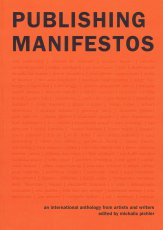
Publishing Manifestos - An International Anthology from Artists and Writers
Technische
Angaben
-
342 S., 23,9x17,1 cm, ISBN/ISSN 9780262544924
Broschur mit Klappen
ZusatzInfos
-
Buch, das eine Sammlung an Manifesten - der letzten Jahrzehnte bis in die Gegenwart - von Künstler*innen, Autor*innen, Redakteur*innen, Verleger*innen, Designer*innen, etc., die das Publizieren als künstlerische Praxis erkunden, darstellt.
|
Titel
-
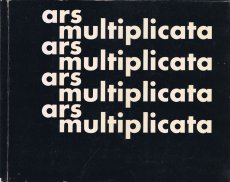
ars multiplicata - vervielfältigte Kunst seit 1945
Technische
Angaben
-
234 S., 20,5x25,9 cm, keine weiteren Angaben vorhanden
Broschur
ZusatzInfos
-
Ausstellungskatalog. Die Ausstellung war eine der ersten ihrer Art und stellte die Frage nach der Originalität und Einzigartigkeit von Kunstwerken im Kontext von Vervielfältigungstechniken in Frage. Sie fand zwischen dem 13.01 und 15.04.1968 statt.
|
Technische
Angaben
-
106 S., 21x14,8 cm, Auflage: Print on Demand, keine weiteren Angaben vorhanden
Broschur
ZusatzInfos
-
Schwarz-Weiß-Drucke
Æther-Design is a collaborative creative group based in Heidelberg, Germany. Æther-Design consists of Götz Gramlich, Max Hathaway, Lukas Breitkreutz and friends. The group is dedicated to creating unique designs and aesthetics, merging contemporary visual influences with a constant craving for new perspectives and fresh impulses.
|
Technische
Angaben
-
106 S., 21x14,8 cm, Auflage: Print on Demand, keine weiteren Angaben vorhanden
Broschur
ZusatzInfos
-
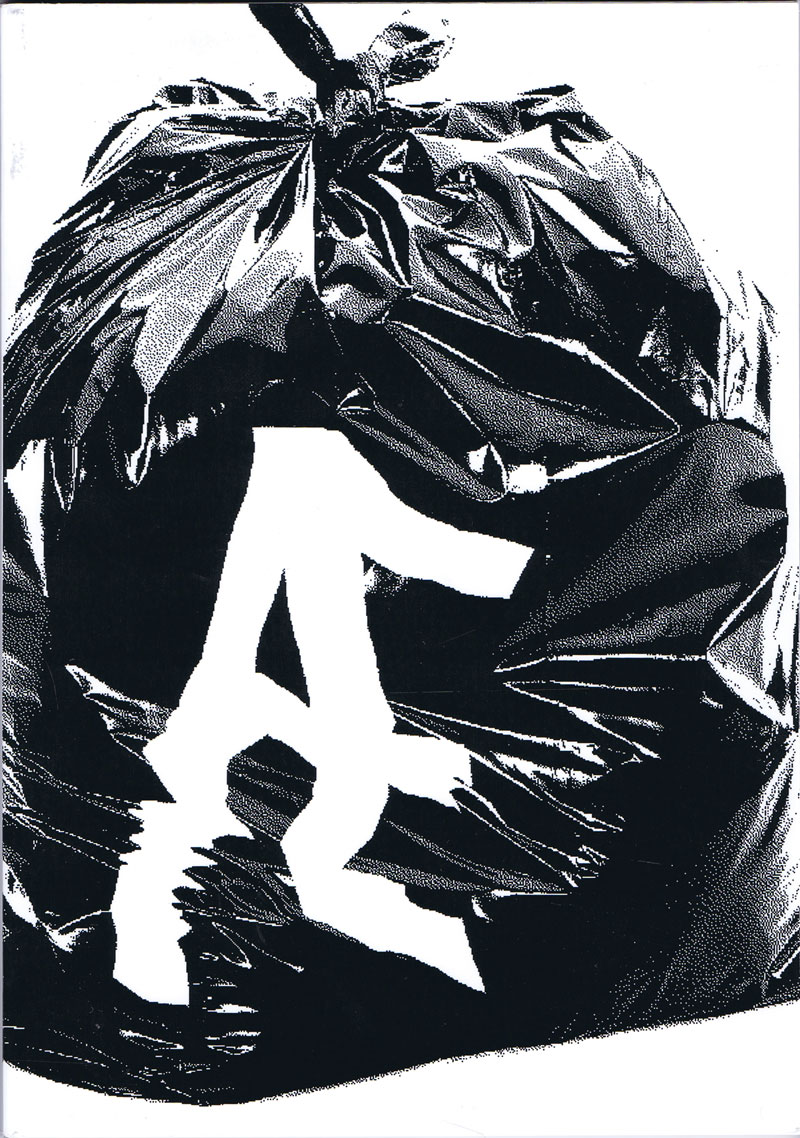
Schwarz-Weiß-Drucke, Nr. 095 aus der Reihe 100for10
Æther-Design is a collaborative creative group based in Heidelberg, Germany. Æther-Design consists of Götz Gramlich, Max Hathaway, Lukas Breitkreutz and friends. The group is dedicated to creating unique designs and aesthetics, merging contemporary visual influences with a constant craving for new perspectives and fresh impulses.
Text von der Webseite.
|
Technische
Angaben
-
46 S., 30x21 cm, Auflage: 1.055, numeriert, ISBN/ISSN 0246-814X
Drahtheftung, und Einzelblätter.
ZusatzInfos
-
Verschiedene Materialien beigelegt wie: Kleiner Puppenkamm, Minikleid, einzelne Kopien, Collagen, Zeichnungen, Plastikrose, Kalligraphie, Federn ...
|
Titel
-
MONU magazine on urbanism #13
Technische
Angaben
-
126 S., 27x20 cm, ISBN/ISSN 1860-3211
Broschur
ZusatzInfos
-
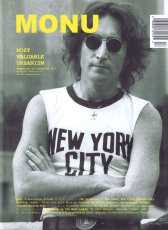
When John Lennon was photographed by the legendary rock 'n' roll photographer Bob Gruen, wearing a New York City T-shirt in the year 1974, he proudly expressed his love for the city of New York. For Lennon, although born in Liverpool, New York City was without doubt the most valuable city. In that sense the value of a city can become extremely personal, subjective, and only a reflection of feelings, as Mika Savela argues in his contribution "Most T-shirtable Cities". Because of this subjective experience the value of a city is - just as the beauty of a city - in the eye of the beholder and what constitutes 'most valuable', in whatever respect, shifts back into our hands, as Bobby Shen puts it in his piece "Within a Day". People attribute a value to spaces that cannot be quantified in statistical terms, but is dependent on how 'city users' identify with the place where they live, as Luciano Alfaya and Patricia Muñiz explain in their article "Urban Perception of Happiness". And this identification is usually based on rather intangible criteria; social, cultural, and psychological dimensions; or qualities such as history, identity, memories, or lifestyle, as Human Wu illustrates in his piece "Tales of Nail Houses". Nevertheless, it would be naïve to exclude certain basic physiological needs out of the value discussion regarding cities. Those basic needs include, for example, security, housing, or health as Ruraigh Purcell, who spent several years running an analytical team producing city ranking lists, points out in an interview with us entitled "The Crumbles of the Cake - The Truth Behind City Ranking Lists". In his opinion, basic, low-level needs have to be satisfied in a city, referring to Maslow's Hierarchy of Needs, before you are in a position to move to a higher level of needs that would take in account things such as educational and cultural stimulus. Most of the evaluation criteria used by companies such as Mercer or the Economist Intelligence Unit to produce the famous city ranking lists that define the so called "most liveable cities", are based mainly on those basic needs. But what is often less known is the fact that those ranking lists are not representative, as they use as a primary source the answers of a particular socio-economic group: expatriates. Klaas Kresse detects that fact in his text "The Systematic Thinking Livability Rankings Imply" and discloses that rankings are not made for the multiplicity of urban dwellers, but for a group of wealthy, well-educated and highly skilled professionals. He furthermore points out that the livability rankings imply an urban thinking in terms of closed systems as cities start focusing on the points already scored, which makes them static and inflexible. To continue being able to change Matthew Johnson proposes in his piece "Is Livability Overrated?" that cities should be allowed to exist in a state of perpetual upgrading and renovation - always under scaffolding, in the form of a transactional urbanism. In his eyes, Houston in Texas is such a transactional city that is evolutionary and voracious, and secure in itself, despite its imperfections. Jürgen Krusche misses such imperfections in the always top-ranked city of Zurich as he clarifies in his contribution "The Value of Ugliness", where the constant striving toward clean, safe, and beautiful public spaces has banished unwelcome individuals from marginalized social groups from public life. But ever since the Economist began some ten years ago to rate cities such as Vancouver as the number one most livable city in the world, while other livability indices by Mercer and Monocle Magazine also gave it consistently high rankings, the safe and clean downtown living model of Vancouver became the planning model for cities around the world, as Brendan Cormier and Christopher Pandolfi explain in their article "Vancouverism is Everywhere". Today, top positions in urban planning councils all over the world are filled with Vancouverities. However, there seems to be a resistance towards Vancouverism and there are possibilities to top livability ranking lists without following the trends, as Stefan Gruber explains in his text "Vienna: Slow Capital?", in which he suggests that the quality of life in a city might also be determined by its capacity to resist certain movements and instead to concentrate on its unique attributes.
Text von der Webseite
|