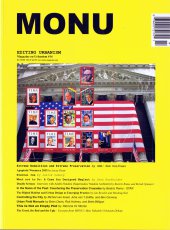
The Naked Lunch: A Stark Honest Discussion On Renewal by UNION3; On Politics of Planning by Henk Ovink; Beyond Editing by Simone Pizzagalli; Extreme Demolition and Extreme Preservation by OMA; Apoptotic Woomera 2035 by Lucas Dean; Eternal Ise by Jarrik Ouburg; Moveable Chair by Sara Hendren; What not to Do: A Case for Designed Neglect by Sean Burkholder; Deadly Serious - Interview with Adolfo Natalini by Beatriz Ramo and Bernd Upmeyer; In the Name of the Past by Beatriz Ramo - STAR strategies + architecture; Cultural Editors by Paul Meurs and Marinke Steenhuis; The Digital Habitat and Urban Design as Emerging Practice by Jan Bovelet and Miodrag Kuc; Between Material and Culture by Ephraim Joris; Controlling the City by Michiel van Iersel, Juha van 't Zelfde, and Ben Cerveny; Layered Reality by Gijs Hoofs and Michiel Daalmans; Urban Field Manuals by Brian Davis, Rob Holmes, and Brett Milligan; This Is Not an Empty Plot by Patrizia Di Monte; The Good, the Bad and the Ugly - Excerpts from MONU's Most Valuable Urbanism Debate.
Despite the current urgency to deal with the enormous potential of the already existing urban material as Urban Editors, there seems still to be an enormous lack of interest in topics such as urban and architectural restoration, preservation, renovation, redevelopment, renewal or adaptive reuse of old structures among architects and urban designers. But ignorance in this matter can only be dismissed as socially irresponsible and economically and culturally unacceptable. But what might be the reason for the prevailing ignorance? Who is to blame? Why is Urban Editing considered to be so utterly unattractive? Felix Madrazo, one of the members of the UNION3 collective, blames the media and in particular architecture publications, as he points out in UNION3's discussion of urban renewal entitled "The Naked Lunch: A Stark Honest Discussion on Renewal". He states that a prestigious architectural magazine such as the Spanish El Croquis would never publish an architect who has been practicing renewal for the last twenty years. In OMA's contribution "Extreme Demolition and Extreme Preservation" Rem Koolhaas holds the arrogance of the modernists responsible for making the preservationist of today look like a futile and irrelevant figure. He furthermore claims that preservation necessitates the development of a theory of its opposite: not what to keep, but what to give up, what to erase and what to abandon - and proposes a system of phased demolition. To a certain extent this is what Lucas Dean recommends in his piece "Apoptotic Woomera 2035" for a small town in South Australia, in which he suggests a programmed urban death that ensures that the urban fabric can constantly undergo a process of rejuvenation. The concept is an analogy to the biochemical process of apoptosis, which is organized cell death that our bodies undergo on a daily basis, killing fifty to seventy million cells, enabling the body to rejuvenate and ensure longevity. Obviously terms such as death and rejuvenation are crucial notions when it comes to Editing Urbanism. In his article "Eternal Ise" Jarrik Ouburg sees destruction as a natural part of preservation. He advises to look east and learn from the way how in Japan important shrines have been rebuild every twenty years for more than ten centuries. But accepting death and decay in buildings is one thing, when it comes to our own death, things get much more complicated. For that reason Adolfo Natalini, one of the founders of the legendary 60ies architecture firm Superstudio, does not like physical changes in cities, because they remind us that we are moving closer and closer towards death, as he explains in an interview with us entitled "Deadly Serious". He likes to be surrounded by things that remain the same as they give us the impression of eternity and he sees architecture as the most powerful medium of this form of hope. To solve the paradoxical situation that cities should on the one hand remain the same, keeping and maintaining all their existing buildings, yet on the other able to change, Beatriz Ramo / STAR suggests in "In the Name of the Past: Countering the Preservation Crusades" to establish Virtual World Heritage Sites as a new category for UNESCO. Virtual preservation enables cities to survive for eternity in the virtual, yet remain living and changing organisms in the real world. Released from the fear of death, Editing Urbanism can become a vital, active and experimental practice, in which the concept of sample and the remix gain importance as a cultural technique as Jan Bovelet and Miodrag Kuc describe in their contribution "The Digital Habitat and Urban Design as Emerging Practice". Just as remixes of songs are alternative versions of recorded songs, made from original versions, remixes of cities can be alternative versions of the original cities. Especially with the help of hand-held devices, mobile and digital online applications, citizens will be able to alternate and control cities as Michiel van Iersel, Juha van't Zelfde, and Ben Cerveny explain in their article "Controlling the City". To edit cities successfully, Brian Davis, Rob Holmes, and Brett Milligan even propose to develop "Urban Field Manuals", which show how to change or maintain your city just as automotive maintenance manuals teach you how to repair or maintain your car. Such Urban Field Manuals allow you for example to learn how, as a non-profit landlord, to approach buildings that are awaiting demolition permissions for a new construction on old properties, and to format micro-contracts that make unoccupied buildings available to other non-profits at the costs of utilities alone. But one of the most successful strategies for such reuse of unoccupied spaces in cities has probably been developed by Patrizia Di Monte recently. In her contribution "This Is Not an Empty Plot", she shows how she created an employment plan, in which sixty one long-term unemployed workers cleaned initially empty plots of the historic district of Zaragoza, which led eventually to the realization of twenty-eight projects on those lots over the last two years.
Text von der Webseite
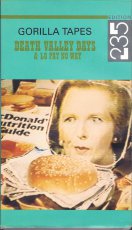
20,4x12 cm, keine weiteren Angaben vorhanden VHS-Kassette mit Scratch-Videos aus GB
ZusatzInfos
Scratch Videos sind eine Mischung aus Kunst, Entertainment und Manipulation von Informationen - eine geniale Mixtur aus subversiver Kraft und Unterhaltung. Ausschnitte aus Spielfilmen, Nachrichten, Berichten und Unterhaltungssendungen sind das Ausgangsmaterial. Die Geräusch/Musik-Struktur wird besonders hervorgehoben und de Bilder zu einer irreführenden, neuen Realität zusammen-'gescratcht'. Dabei ist Death Valley Days eine Produktion, die vor Abstechern in die Politik nicht zurückschreckt. Präsentiert in der Videothek der documenta 8 und im Tourprogramm der Videonale 86.
Text von der Kassette.
Taken 100% from reality, this is a full length transcript of the fourth quarter 2009 Monsanto Company Earnings Conference Call, treated, layouted, published and performed as an original theater piece (on occasion of the exhibition & symposion "The apparatus of life and death" at the Museum of Contemporary Art Skopje).
The main acts are "Presentation", "Question-and-Answer Session" and "Copyright Policy", the main characters are Hugh Grant (President & CE), Carl Casale (EVP & CFO), Terrell Crews (EVP, CEO Vegetable Business), Scarlett Foster (VP IR) as well as various Analysts.
As Karsten Schubert puts it "A gulf has sprung between post-Duchampian, postmodern artistic practice and a still Modernist-Romantic interpretation of copyright."
Dies ist eine zu 100% der Realität entnommene Abschrift der Telefonkonferenz der Monsanto Company für das vierte Quartal 2009, die als originelles Theaterstück bearbeitet, gestaltet, veröffentlicht und aufgeführt wurde (anlässlich der Ausstellung und des Symposions „The apparatus of life and death“ im Museum für zeitgenössische Kunst in Skopje).
Die Hauptakte sind „Präsentation“, „Frage-und-Antwort-Sitzung“ und „Copyright Policy“, die Hauptdarsteller sind Hugh Grant (Präsident & CE), Carl Casale (EVP & CFO), Terrell Crews (EVP, CEO Vegetable Business), Scarlett Foster (VP IR) sowie verschiedene Analysten.
Karsten Schubert formuliert es so: „Es ist eine Kluft entstanden zwischen der postduchampianischen, postmodernen künstlerischen Praxis und einer immer noch modernistisch-romantischen Interpretation des Urheberrechts.“
Übersetzt mit DeepL
Text von der Webseite
[32] S., 15x11,2 cm, Auflage: 125, 2 Stück. keine weiteren Angaben vorhanden Drahtheftung, zweifarbiger Siebdruck auf 170g Papier, in verschiedenen Farben gedruckt
Zweite Edition. Die erste erschien 2018 als ein einzelnes Heft und ist ebenfalls im AAP archiviert. Manche der Motive wiederholen sich, andere sind neu.
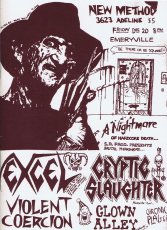
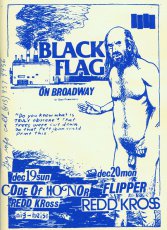
This is a small selection from the Tom Law collection which is now in the collection of Stanford Libraries. The whole collection features over 1400 hand bills from San Fransisco's 80's music scene from bands like Flipper, Sonic Youth, Dead Kennedys, Sun Ra, The Dicks, Hüsker Dü, Greatfull Dead and many more. This zine is printed in different colours, therefor there is no copy like the other.
Text von der Website
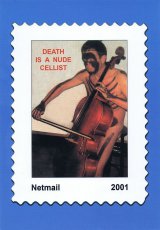
10,4x14,8 cm, keine weiteren Angaben vorhanden Einladung für ein Mail Art Projekt von Peter Küstermann mit dem Thema "Death Is A Nude Cellist".
Die entstandenen Werke wurden in St. Niklaas in Belgien ausgestellt. Peter Netmail performte in verschiedenen Städten passend dazu als nackter Cellist. (entnommen vom Text von Postkarte)
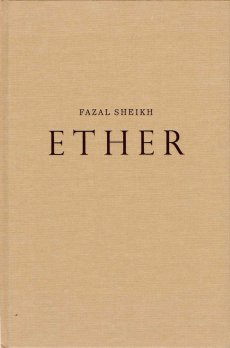
[88] S., 32,5x21,5 cm, ISBN/ISSN 9783869306537 Hardcover, fadengeheftet
ZusatzInfos
The pictures in Ether, Sheikh’s first project in color, were made as a way to honor the experience of death and to try to comprehend its significance. Benares (Varanasi) is one of India’s sacred cities, where many Hindus come to die in the belief that they will find salvation. As he walked its streets by night, Sheikh observed sleeping figures, shrouded in blankets, lost to an oblivion that seemed, in that holy city, to offer a simulacrum of death.
Text von Website
About the series:
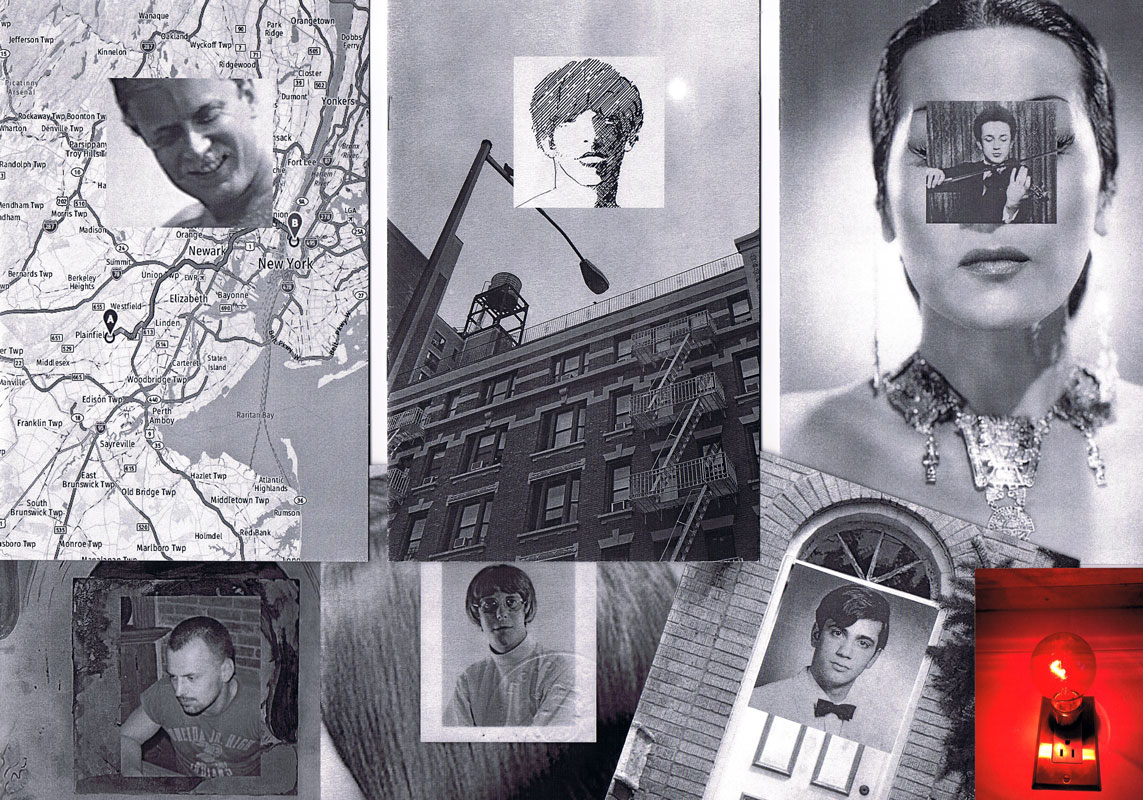
The For Everard zine series chronicles the 1977 fire at New York's Everard Baths, combining archival research with imagined narratives to re-focus attention to obscured histories. The series explores the media coverage of the subsequent investigation of the fire, and the lives of the nine men who perished. The zines bring together photographic images with primary news sources, as well as personal anecdotes collected from eyewitness testimonials.
About the individual zines:
For Everard, Vol. 1, 2013, ed. 100 (nr. 65)
This zine chronicles the May 25, 1977 fire at New York's Everard Baths and the media coverage of the subsequent investigation.
For Everard, Vol. 2 (Bloodbrothers), 2013, ed. 100 (Nr. 81)
In the second volume of his series chronicling the 1977 fire at New York’s Everard Baths, Anthony Malone focuses on Bellevue Hospital’s blood drive for the victims of the great bathhouse tragedy. Malone draws parallels between the 1977 restrictions placed on gay men for donating blood to their “brothers” and current FDA guidelines that indefinitely defer donations from men who have had sex with men since 1977. This black and white photocopied zine (ed 100) juxtaposes archival images, news clippings, and just a touch of fantasy.
For Everard, Vol. 3 (Remembering Jimmy), 2015, ed. 100 (Nr. 94)
Volume 3 of the series, For Everard is dedicated to the memory of Jimmy Stuard, who died in the tragic fire at the Everard Baths in 1977. Stuard was a rising star in the disco music scene. He spun records first at Boston’s 1270 Club, and later at New York’s 12 West, where he inspired an entire generation of musical artists and DJs. In this particular volume, Anthony Malone assembles images and archival texts that serve as a tribute to the great Jimmy Stuard.
For Everard, Vol. 4 (A Lovely Show), 2016, ed. 100 (Nr. 62)
For Everard, Vol. 4 (A Lovely Show) is a tribute to Kenneth Hill, one of the nine men who died in the devastating fire at the Everard Baths in 1977. Kenn played a vital role in the East Village/Lower East side countercultural movement in the late ‘60s and 1970s. He was a hippie, a bar tender at Phebe’s (a watering hole and salon for the experimental theater community in the 1970s), one of the founders of the Old Reliable Theatre Tavern, House Manager at La Mama Experimental Theatre Club, and a photographer. This zine celebrates Kenneth Hill by collaging archival documents with personal artifacts and pictures of Kenn from meaningful moments in his life.
For Everard, Vol. 5 (A Dearly Loved Man), 2017, ed. 100 (Nr. 95)
For Everard, Vol. 5 (A Dearly Loved Man) assembles images and stories from the life of Ira Landau, a gifted and dedicated teacher who died in the tragic fire at the Everard Baths in 1977. Ira left behind a devoted family (his mother, brother, niece, and lover) and is still greatly missed by his loved ones. This zine is a tribute to the life and accomplishments of a remarkable man who served in the Peace Corps and committed himself to educating young minds both abroad (in the Middle East) and at home in the US. It contains family photos and personal images generously contributed by Ira’s niece.
For Everard, Vol. 6 (Yosef’s Song), 2017, ed. 100 (Nr. 94)
Volume 6 of the series For Everard celebrates the life of a remarkable musical prodigy, Yosef Synovec. This zine tells the story of a young man with great aspirations who emigrated to the United States from Czechoslovakia to study classical violin. In 1976, Holly Woodlawn overheard Synovec vocalizing as he was painting the bathroom of his East Village apartment, and determined on the spot that she had discovered an emerging star. As a singer, Synovec used his extreme vocal range to imitate the voice and persona of Peruvian diva Yma Sumac. He performed Sumac’s exotic musical numbers at several New York City cabarets and show venues. Sadly, on May 25, 1977, Yosef perished in the tragic fire at the Everard Baths.
For Everard, Vol. 7 (Tony from the Bronx), 2017, ed. 100 (Nr. 86)
This zine brings together images and stories from the life of Tony Calarco, one of the nine men who died in the fire at the Everard Baths in 1977. Tony was only 26 when he died. He lived with his parents and siblings in a modest house in the Bronx. He had recently graduated from college and was working as a social worker in New York city at the time of his death. Tony had aspirations to become a lawyer and was scheduled to begin law school in September of 1977. This zine celebrates Tony Calarco’s memory through photos of Tony, artifacts from his high school and college years, and recent photographs of his home and final resting place.
For Everard, Vol. 8 (Looking for Amado), 2017, ed. 100 (Nr.84)
Amado Alamo, a young man only 17 years old, lost his life in the fire at the Everard Baths in 1977. In Volume 8 of For Everard, Anthony Malone documents his search for the identity of the youngest victim of the Everard fire. The zine is an abstracted portrait of Alamo that assembles the few extant fragments of his story culled from newspaper articles and documentary sources glued together with the artist’s imagination.
For Everard, Vol. 9 (Last Call), 2017, ed. 100 (Nr.72)
Life was difficult for Hillman Wesley Adams. He was born in Jacksonville FL in 1938. His mother died just a few months after his birth, and by the age of nine, he found himself in an orphanage with his older brother. Fast forward 30 years: Hillman moved to NYC, struggled to make ends meet while working on and off as a bartender, and he met his lover, Ralph, with whom he shared a modest apartment in New Jersey. On May 25, 1977, Hillman died in the fire at the Everard Baths. Vol. 9 of For Everard is an assemblage of newspaper articles and vintage photos chronicling the life and untimely death of Hillman Wesley Adams.
For Everard, Vol. 10 (In Memoriam: Patrick Nott), 2018, ed. 100 (Nr. 64)
Volume 10 of For Everard memorializes the life of Patrick Nott, one of the nine men who died in the fire at the Everard Baths. Nott, a native of Wales with a passion for theater, literature, and music, pursued a successful career in hairdressing. He fell in love with his pen pal (a young woman from Brooklyn) and after their marriage, they moved to New York City, where Nott worked at the Vidal Sassoon Salon. This zine weaves together elements from his story (shared with the artist by Patrick Nott’s wife), with photographs, newspaper clippings, and artifacts. It acts as a humble tribute, an “In Memoriam” for this greatly loved man.
For Everard, Vol. 11 (Thunderbird), 2019, ed. 100 (Nr. 79)
Brian Duffy was an aspiring artist. In 1966 he was accepted to Pratt Institute of Art and although he declined admission to the school, he seized the opportunity to move to NYC and start a new life for himself. In the city, he worked hard at various retail jobs and tried to break into the theater, but everything changed when he met the love of his life, Bradley. The couple moved to a “quieter life” in Boston. They worked in restaurants in the Back Bay area and created a community for themselves amongst their chosen family of friends. Volume 11 of For Everard celebrates the brief life of Brian Duffy, a young man who died in the fire at the Everard Baths in 1977. This zine compiles photographs and stories shared with Malone by Brian’s sister and dear friend.
The pseudonym "Anthony Malone" comes from a novel by Andrew Holleran (Dancer from the Dance). In this novel, Malone is the protagonist and at the end he disappears. Some of his friends believe that he may have committed suicide, others feel that he may have run away from New York, while some say that they saw him at the Everard Baths on the night of the fire. I imagine that Malone survived the fire and he is now making books and zines telling the story of the tragedy.
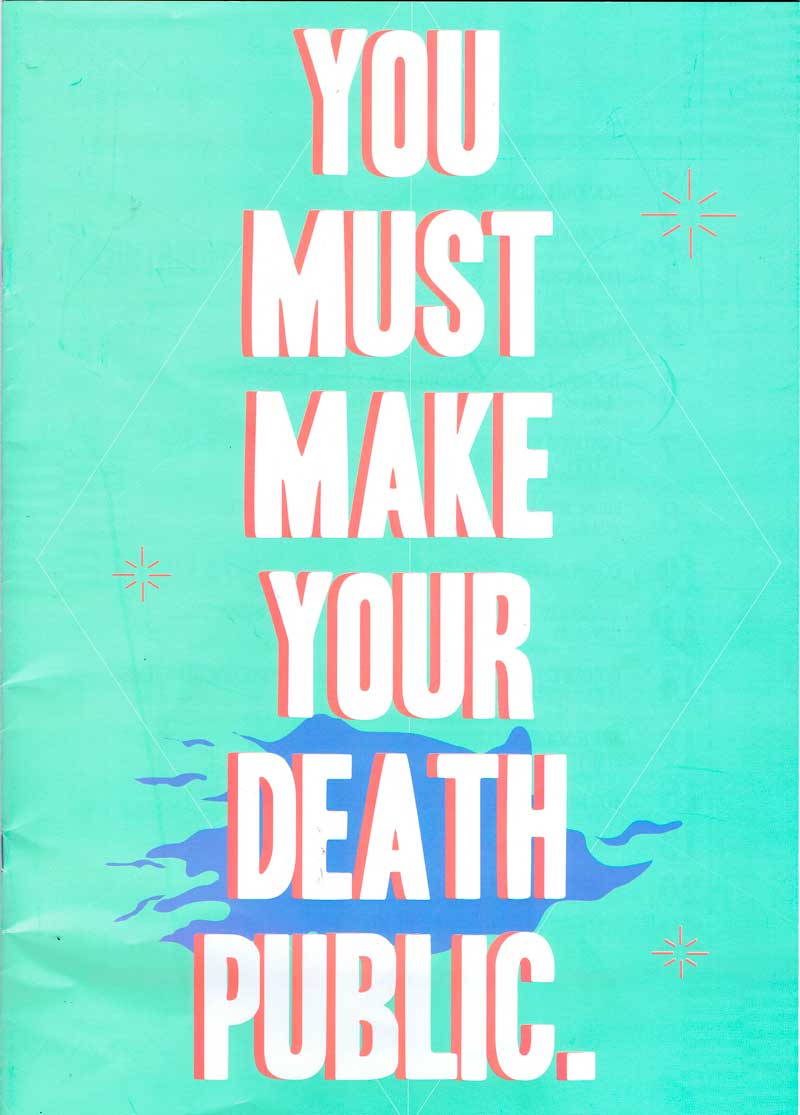
Anlässlich der gleichnamigen Ausstellung im De Appel Art Center, Amsterdam, 23.04.-12.06.2016. "You must make your death public" ist Teil des projektes Untitled (two takes on crisis), entwickelt von Teilnehmern des Curatorial Programme 2015-16. Mit Philipp Gufler, Maximiliane Baumgartner, Lian Ladia, Maria Guggenbichler, Rabe Perplexum, Mara Zust u. a. Mit einem Interview mit Louwrien Wijers.
Design Layout Syennie Valeria
50x39,5 cm, Auflage: 50, numeriert, signiert, keine weiteren Angaben vorhanden Objektzeitschrift mit 9o Min. Musikkassette, signierten Originalen, Schrauben, Linolschnitt, Briefumschlag, Zeitungspapier, Postkarte mit Künstlerbriefmarken, alles auf Hartpappe mit original gesprühtem Titel und Collage
ZusatzInfos
mit Joseph Beuys (ja ja ne ne) Performance 1968
MC Seite A:
The Smith : Hand in glove 19.12.83 London, Kalahari Surfers : Free state tence 1984, The Cure : Den Bosch re-mix 1985, Home Taping Death : scheiß-egal 1985, General Strike : Interplanetary Musik 1984, Sisters Of Mercy : Knocking on heavens door 12.05.85 Bonn, Klaus Nomi : Keys of life 1981, Klaus Nomi : You dont own me 1981, Einstürzende Neubauten : Sehnsucht Bochum, Renaldo & The Loaf : Lime yelly gress 1980, Gary Numan : M. E. 1979, Joy Division : Love will tear us apart 20.07.1980, Reanaldo & The Loaf : Spraths meduim 1980
Seite B:
Anna Domino : Rhthm 1984, Psychic TV : Stolen kisses 1982, The Residents : Constantinople, New Order : Love will tear us apart, Jove, Anne Clark : True love tales, Snakefinger : Tue cöel, .. art From J.V. : Keine Angst, Billy Bragg : Love gets dangerous, Verraten Und Verkauft : Lichter der Stadt, Alien Sex Fiend : Nurse, Blaine L. Reininger : Songs of the silent age, C.W. Urtacek : Huerly emporary, Domnestic Exile : Violet
Higgins schrieb A Book im Laufe eines Jahrzehnts von 1960 bis 1970, motiviert durch die intensiven und gegensätzlichen Gefühle, die er nach der Heirat mit seiner Partnerin Alison Knowles und der Nachricht vom plötzlichen Tod seines Bruders erlebte. Der daraus resultierende Text ist in fünf Gesänge gegliedert, die sich in Kapitel aufteilen. In A Book wendet sich Higgins von der lyrischen und konkreten Poesie der späten 1950er Jahre ab und wendet sich einem eher konzeptionellen literarischen Stil zu. Ein Zufallssystem und Würfel in Verbindung mit einem Englisch-Indonesisch-Wörterbuch spielen ebenfalls eine entscheidende Rolle bei der Erarbeitung des Buchinhalts. Higgins merkt an, dass A Book
"immer laut gelesen oder gehört werden sollte, vorzugsweise mit dem Text, der zwischen mehreren Lesern weitergegeben wird, wenn jeder müde wird, zu viel lacht oder einen natürlichen Pausenpunkt erreicht."
16 S., 14,8x14,8 cm, ISBN/ISSN 9783940548092 Drahtheftung, in Transparenthülle
ZusatzInfos
´TREES´ is a series of tree drawings from 2008 and 2009 by the german artist Stephane Leonard.
Different trees without any leaves captured at their most naked, most fragile moment right in between life and death. The pencil describes sceleton like structures giving the trees an airy transparency leading one towards their momentary state of existence
28 S., 14,8x14,8 cm, ISBN/ISSN 9783940548221 Drahtheftung, in Transparenthülle
ZusatzInfos
Sketches and Experiments from the artwork:
ALARMA MAN | LOVE FOREVER.
The record was published by sinnbus records in 2010.
In the process of drawing and designing the cover a small book emerged and was meant to be published and shared with the world.
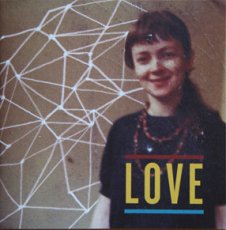
´LOVE´ is a selection of drawings on found footage photographs by the artist Stephane Leonard and those drawings processed and edited by the designer Martin Eichhorn.
The first half of the book is dedicated to all the drawings and the second half to various layout sketches and experiments for the artwork of the swedish band Alarma Man´s 2010 record LOVE FOREVER. The photographs display different stages within relationsships - from childhood to marriage to death. Leonard´s drawings and drawn words react and interact with the photos scratching off the obvious, exposing invisible emotional aspects of the scene
The earliest (1960-62) section of Higgins' largest work, designed to be read only aloud.
Die Great Bear Pamphlet Reihe wurde 1965-67 von Dick Higgins in der Something Else Press veröffentlicht.
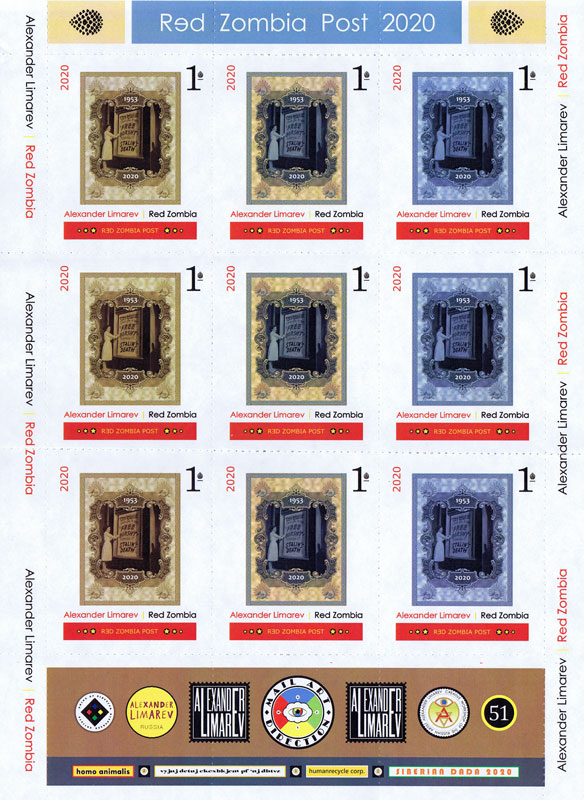
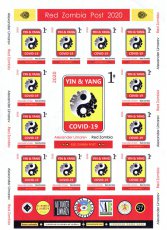
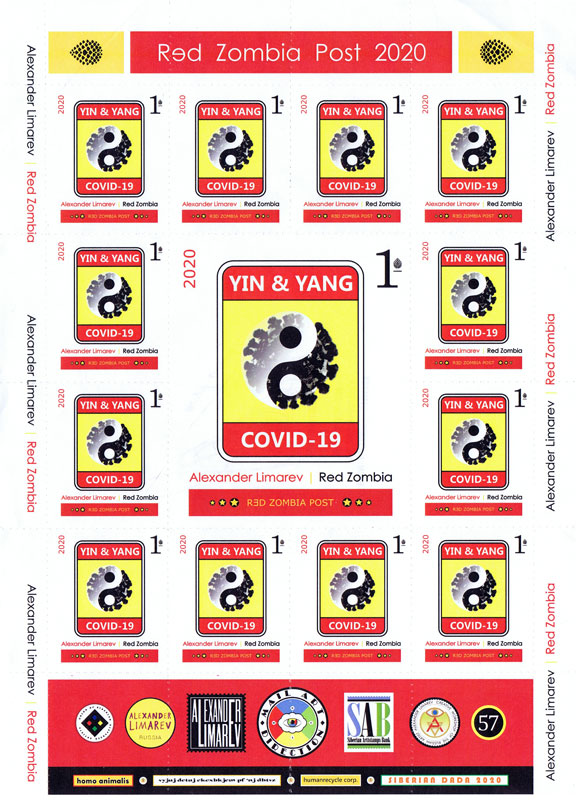
2 S., 29,7x21 cm, signiert, 3 Teile. keine weiteren Angaben vorhanden Zwei Bögen Künstlerbriefmarken, perforiert, Rückseite gestempelt und mit handschriftlichen Gruß, Umschlag von Limarev an Groh mit russischer Briefmarke beiliegend und auf der Rückseite Vermerk des Künstlers: 12.07.2020 - SWAP ARTISTAMPS 2020.
Auf dem einen Bogen befindet sich auf den Briefmarken das Motiv eines sakralen, opulenten, barocken Rahmens mit den Jahreszahlen 1953 und 2020. In dem Rahmen eine Frau, neben einer Ankündigung "1203 Restaurant - Free Borscht - Stalin's Death" (Todesjahr v. J. Stalin: 1953)
Auf dem anderen Bogen das Covid-Virus in einer Collage mit dem Yin-Yang-Zeichen.
[32] S., 15x11,2 cm, Auflage: 125, 2 Stück. keine weiteren Angaben vorhanden Drahtheftung, zweifarbiger Siebdruck auf 170g Papier, mittig eingebundener gefalteter Flyer auf orangenem Papier
Zweite Edition. Die erste erschien 2018 als ein einzelnes Heft und ist ebenfalls im AAP archiviert. Manche der Motive wiederholen sich, andere sind neu.
This is a small selection from the Tom Law collection which is now in the collection of Stanford Libraries. The whole collection features over 1400 hand bills from San Fransisco's 80's music scene from bands like Flipper, Sonic Youth, Dead Kennedys, Sun Ra, The Dicks, Hüsker Dü, Grateful Dead and many more. This zine is printed in different colours, therefore there is no copy like the other. What you see here is just an example of the colours. A small story about the collection is also included.
Text von der Website
Fazal Sheikh made his first trip to the holy Indian city of Vrindavan in 2003. Each year thousands of women make their way there to join the community of widows who spend their days in the temples, worshipping their god Krishna, and preparing for death. Over the next three years, Fazal Sheikh became accepted by the widows, who agreed to sit for their portraits and talked to him about their lives. Their stories revealed how powerless some of the women had been under the strictures of traditional Hindu law. They were victims of enforced marriage, physical violence, sexual abuse and neglect. Some had been evicted from the family home once their children were married. Others had left of their own accord. As Fazal Sheikh discovered, what the women find in Vrindavan is not just religious solace, but in the sisterhood of other widows they find companionship and support. In his portraits their faces are suffused with calm – in some cases they already seem to have reached a half-life, somewhere between this world and the next – and their religious faith, in many ways the source of their past troubles, finally brings them peace. This project was published as Moksha
Text von Website
Anlässlich der gleichnamigen Ausstellung von Paulo Nozolino im Museu de Arte Contemporanea de Serralves, Porto, 07.05.-10.07.2005.
Paulo Nozolino only makes black and white photographs and they are dominated by an impossible darkness that seems impenetrable to light. The photographs were made all over the world - notably in countries of the Arab world - but in the majority of cases it would be difficult to attribute a specific location to them.
Photographs from Auschwitz are the decisive exception. Auschwitz appears as the absolute place and time that orientates everything else. In thirty years of a career as a photographer, Nozolino has constantly intensified his tragic vision of reality: this is visualised in pictures that originate from his own biography and travels. in pictures of men, women and children. in pictures of birth, love making and death.
This publication assembles for the first time photographs from Nozolino's different projects over the years, to form a new narrative, untold until now: the narrative of beginning and ending, and at the same time the narrative of his life's work.
Text von der Webseite
Through his earlier projects, Moksha and Ladli, Fazal Sheikh came to realize that for many women in India life is not a line, but a circle. Death is not an end but a resting place in the afterlife, from which the soul returns to earth and is reborn. The Circle reflects this cycle. It is dedicated to the women who helped Fazal Sheikh in India and to the hundreds of thousands of women with similar experiences that these portraits represent.
Text von der Webseite
Copyrighthinweis: Das Copyright für die abgebildeten Publikationen bleibt bei den jeweiligen Rechteinhabern (Autoren, Künstlern, Fotografen, Gestaltern, Publizisten). Die Abbildungen und Textzitate dienen der künstlerischen und wissenschaftlichen Recherche.
Hier werden Werke dokumentiert, die sonst nur schwer oder gar nicht zugänglich wären. Wer nicht damit einverstanden ist, dass sein Werk auf dieser Webseite gezeigt wird, kann die Abbildung umgehend durch mich löschen lassen.
Für wissenschaftliche Recherchen können die großen Abbildungen auf Antrag freigeschaltet werden.
Wenn Sie als Rechteinhaber möchten, dass Ihre Abbildungen bei Klick größer gezeigt werden (Höhe x Breite = ca. 800 x 1200 Px), dann melden Sie sich bitte bei mir: