|
Titel
-
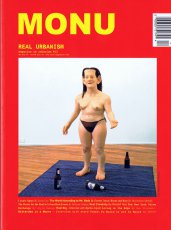
MONU magazine on urbanism #12
Technische
Angaben
-
144 S., 27x20 cm, ISBN/ISSN 1860-3211
Broschur, verschiedene Papiere.
ZusatzInfos
-
Luxury Space By Jason Lee; The World According to Mr. Reds By Doreen Jakob; The Shelter Category By Mammoth (Stephen Becker and Rob Holmes); How the City of Broad Shoulders Bought its Growth Spurt By Karl Johann Hakken; Residential Developers and Investors in Central Europe: Boom and Bust By Maximilian Mendel; Pyongyang in a New Era By Yim Dongwoo; Casino City State By Rustam Mehta and Thomas Moran; Solidere, Inc., or Downtown Beirut By Carol Moukheiber; Real High - The Desire for the Real in Urban Real Estate By McLain Clutter; Real Creativity: A Case for Ethical Freedom in Architecture By Randall Teal; Life without Architects - Interview with Magriet Smit By Bernd Upmeyer; The New York Value Exchange By Joyce Hwang; Real Big - Interview with Bjarke Ingels By Beatriz Ramo; Magic Realism - A New Skyline for Rome By Simone De Iacobis; Business Park De Hoef Revisited 1998-2008 By Arjan Harbers (Topotronic); Brand New Landlords By Daan Roggeveen and Michiel Hulshof; Market Value(s) By STAR; Living on the Edge By Bas Princen; Why should a Developer read Aristotle By Marta Relats; Unbuilt Rotterdam By ZUS [Zones Urbaines Sensibles]; Rotterdam is a Whore - Interview with Andre Kempe By Beatriz Ramo and Bernd Upmeyer; To Build or not to Build By MVRDV
Just like the "Ideal Woman" on the cover of this issue on Real Urbanism - a sculpture by the Brooklyn based artist Tony Matelli - most of our cities are shaped by a particular set of values that does not necessarily lead to high quality urban spaces, but instead to scary, ethically unacceptable and distorted forms. As the "Ideal Woman", so "Ideal Cities" can easily end up only fulfilling the wishes and dreams of a powerful minority, but neglect the needs of most of the other people. Jason Lee, one of the contributors to this issue, that deals more with "Real Estate" Urbanism rather than with Actual or Factual Urbanism, uses this sculpture in his article "Luxury Space" to display the consequences that can occur when a financially powerful elite develops real estate projects in the city of Shanghai merely to accommodate their consumerist desires. Cities have been reduced to machines for making and spending money as Stephen Becker and Rob Holmes put it in their piece "The Shelter Category". Especially in Central European countries, where two decades ago the state-controlled economy changed into a market-economy, developers are driven by pure profit rather than by a genuine desire or even awareness of sustainable neighbourhoods and city development as Maximilian Mendel describes in his text "Residential Developers and Investors in Central Europe: Boom and Bust". But blaming only the financial elites and the real estate industry for the prevailing urbanism of mediocrity would be too easy. For successful urban planning, cities depend on private financing as Carol Moukheiber points out in her contribution "Solidere, Inc., or Downtown Beirut", where a productive collaboration between a corporate and a cooperative party led - although heavily criticised and carried out in a kind of pseudo democratic Berlusconian way - to prosperous results. In the case of Rotterdam, where the municipality actually cares very little about the city, real estate developers seem to be even more concerned about the quality of urban spaces than the city itself, as stated by Andre Kempe in an interview with us entitled "Rotterdam is a Whore". To halt the process by which the built-up form of our cities continues to be mainly driven by practical concerns such as efficiency, profit, and self-promotion, Randall Teal proposes in his piece "Real Creativity: A Case for Ethical Freedom in Architecture" that architects should become developers themselves. But how many architects would be able and interested in doing that? Magriet Smit, a Rotterdam based real estate developer, explains in the interview "Life without Architects" that she actually tries more and more to avoid working with planners and rather collaborates directly with construction companies as they share a greater understanding of their profession. But to prevent our cities from turning into monstrous "Ideal Cities", as perverted as the "Ideal Woman", all the parties involved that are shaping the cities - the developers, the municipalities and the planners - have to accept their interdependencies, and have to try to understand the different interests of each party and have to dare to navigate into unknown territory as Bjarke Ingels concludes in an interview with us entitled "Real Big".
Text von der Webseite
|
 
Technische
Angaben
-
10x21 cm, 35 Teile. keine weiteren Angaben vorhanden
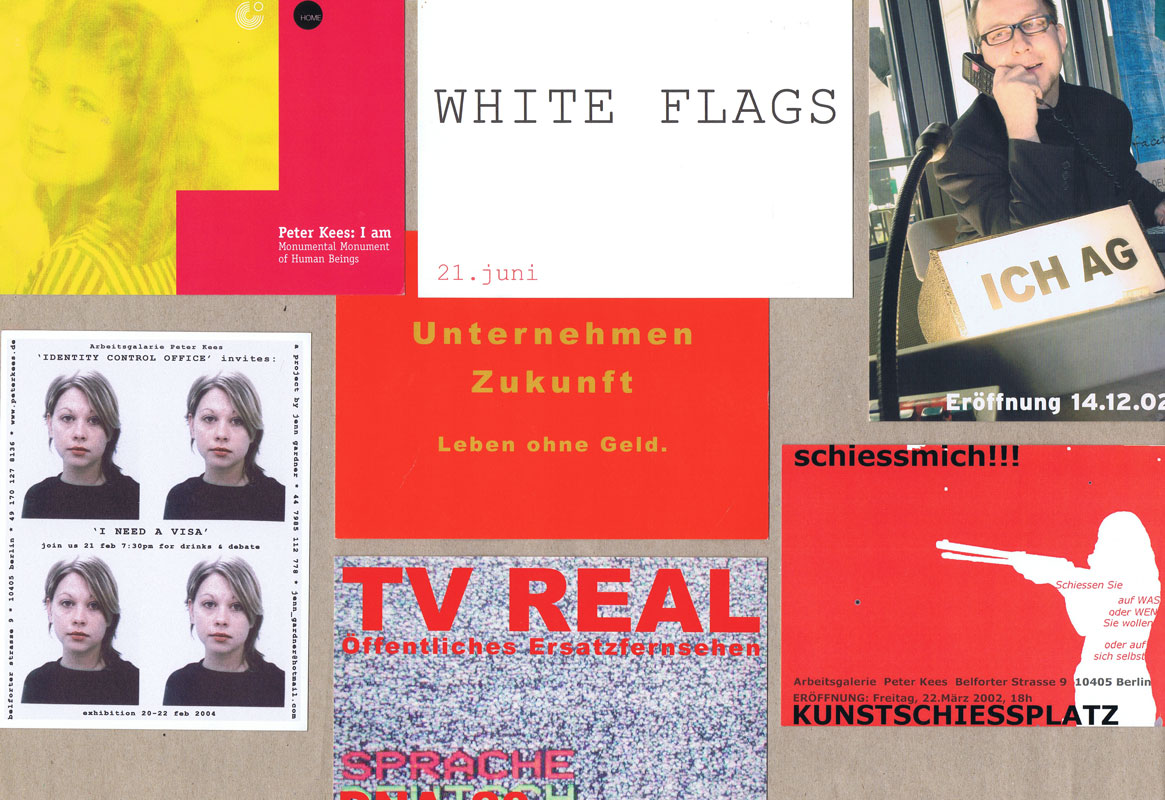
31 Din A6 und Din A6 lang Postkarten, 4 Din A5 Karte: Aus den Jahren 2002 bis 2010 zu Ausstellungen und Aktionen des Künstlers Peter Kees. Die beiden Abbildungen der Karten - als Teil dieses Datensatzes - zeigen nur einen Teil des Konvoluts. Manche Postkarten der insgesamt 29 erfassten liegen doppelt vor; es handelt sich hier daher um 19 verschiedene Karten.
ZusatzInfos
-
Auflistung nach Ausstellung und Themen:
white flags, arbeitsgalerie, Berlin 2002
schiessmich!!! - Kunstschiessplatz, Arbeitsgalerie, 2002
Ich AG Leben lohnt sich!, Arbeitsgalerie, Berlin, 2002
I am - Monumental Monument of Human Beings, Galerie Home und Goethe-Institut Prag, 2003
Strömungen/Proudeni, Künstlersymposium, Amonhof, Dresden, 2003
TV REAL Öffentliches Ersatzfernsehen - Interviews zur Lage der Nation, DNA Aktionsgalerie, Berlin, 2003
Schule der Wahrnehmung oder Die Voyeuristen-Galerie, Stadtblind, Berlin, 2003
Unternehmen Zukunft - Leben ohne Geld., Galerie Meerrettich, Berlin, 2004
Identity Control Office - I Need A Visa, Jenn Gardner, Berlin, 2004
Überreichweiten - Zur Wahrnehmung der DDR in der aktuellen Kunst, Projektzentrum für zeitgenössische Kunst, Dresden, 2005
100% SICHER, Galerie der Künste, Berlin 2005
PSÜV Psychisch-Sozialer-Überwachungs-Verein, DNA Galerie, Berlin, 2005
TV REAL - Öffentliches Ersatzfernsehen Pop-Up, Kunsthaus Bregenz, 2005
TV REAL - Öffentliches Ersatzfernsehen, Kubus, Büro 2007, Mannheim, 2006
TV REAL - Öffentliche Ersatzfernsehen, Kubus, Kapuzinerplanken, Mannheim, 2006
TV REAL - Öffentliches Ersatzfernsehen, Kubus. Friedrichsplatz, Kunsthalle, Mannheim, 2006
Embassy of Arcadia - Eröffnung der Botschaft Arkadiens, Berlin 2006
Souvenirs de Kassel - Fundstücke der documenta 12, artMbassy, Berlin, 2007
Wir machen mehr aus Ihrem Geld!, galerie weisser elefant, Berlin 2007
Bäckerei Kollwitz - Ernennung zum Kunstwerk, 2008
Hochkopf-Manifest, 2010
You never walk alone, galerie weisser elefant, 2010
|
Titel
-
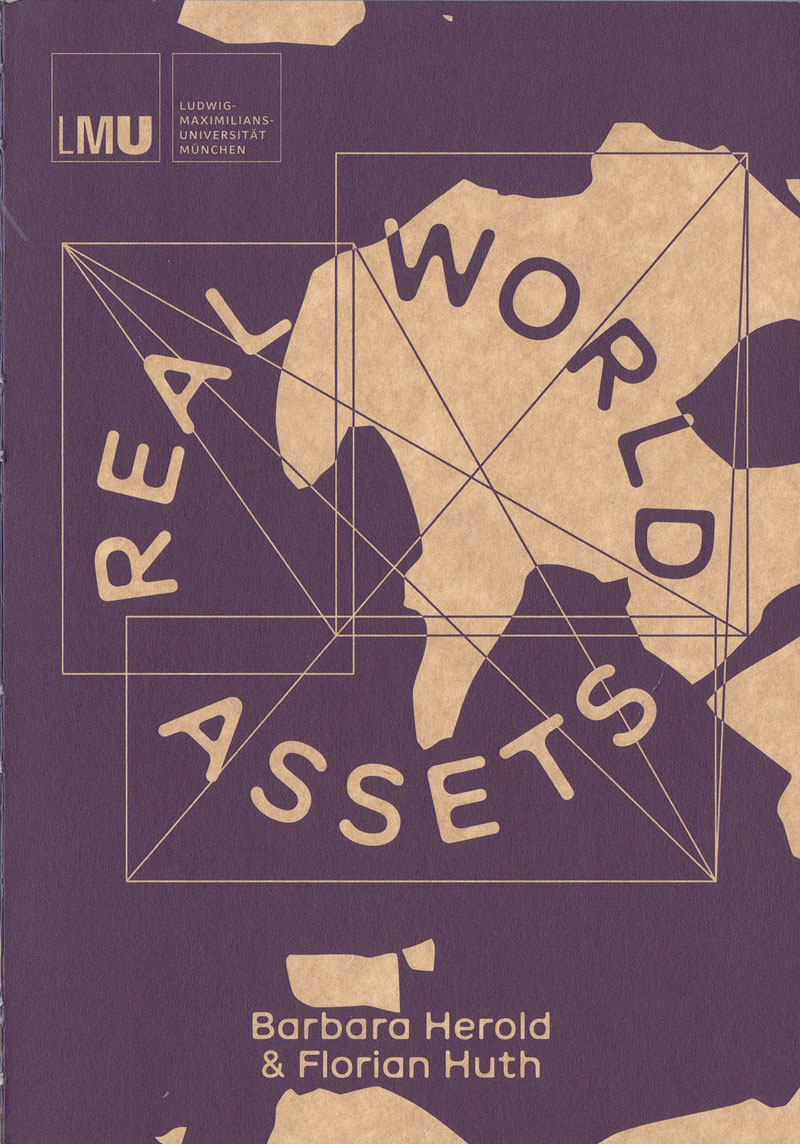
Barbara Herold & Florian Huth - Real World Assets
Technische
Angaben
-
72 S., 21x14,7 cm, Auflage: 600, 2 Stück. ISBN/ISSN 978-3-68919-064-4
Offener Rücken, Fadenheftung
ZusatzInfos
-
Publikation zur Ausstellung 15.05.-31.07.2025 im CAS LMU.
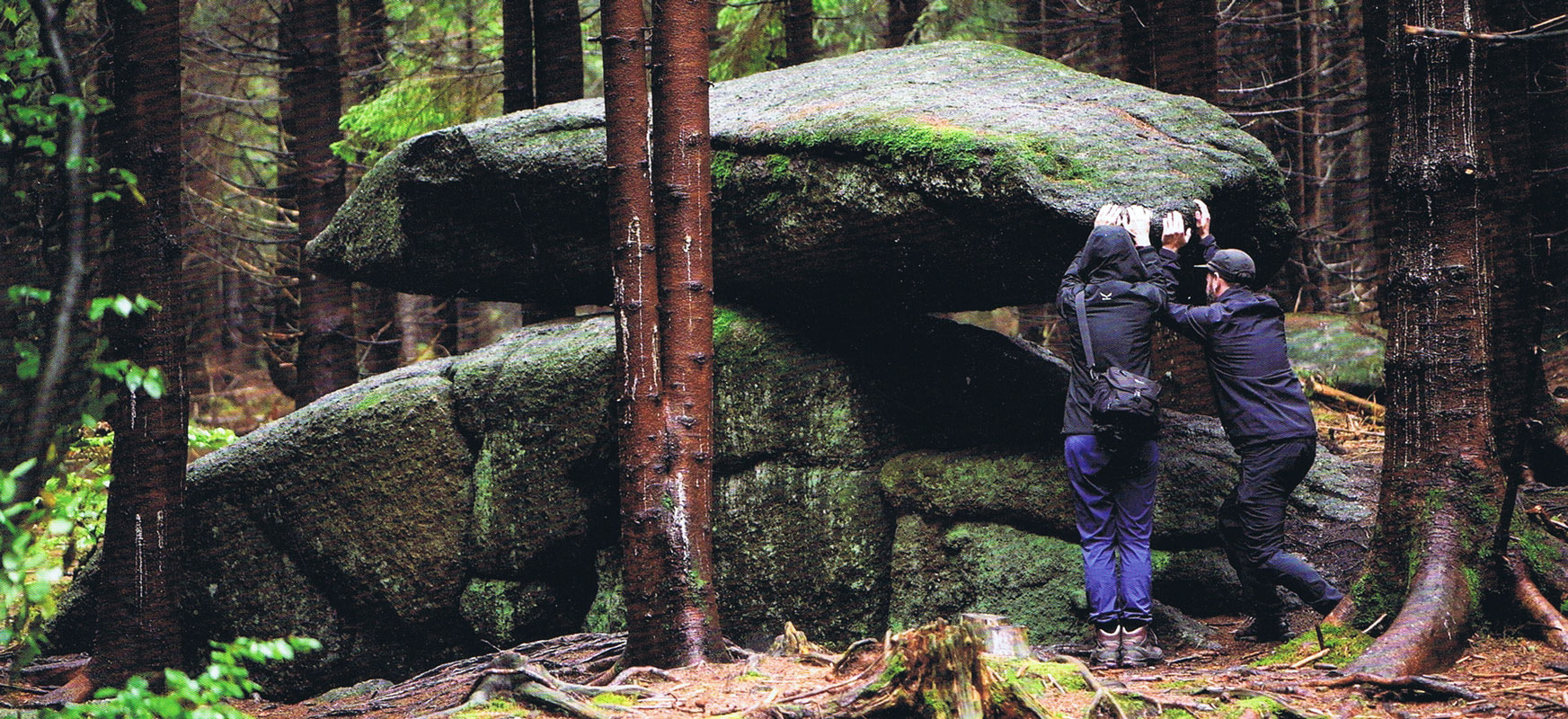
Das Künstler*innenduo Barbara Herold und Florian Huth erforscht seit 2013 das Spannungsfeld zwischen Natur und Künstlichkeit. Ihre Arbeiten hinterfragen Konzepte von Authentizität, Simulation und Fake in einer zunehmend digitalen, postnaturalen Welt. Sie zeigen grafische Serien aus dem Werkkomplex Real World Assets. Mithilfe von Vermessungs- und Bestandsaufnahmeverfahren verbinden sie dokumentarische Präzision mit einer experimentellen Bildsprache und loten so die Grenzen zwischen wissenschaftlicher Erfassung und künstlerischer Interpretation aus.
Text von der Webseite
|
Titel
-
Kunst im CAS - Barbara Herold und Florian Huth - Real World Assets
Technische
Angaben
-
2 S., 10x21 cm, 2 Stück. keine weiteren Angaben vorhanden
Flyer
ZusatzInfos
-
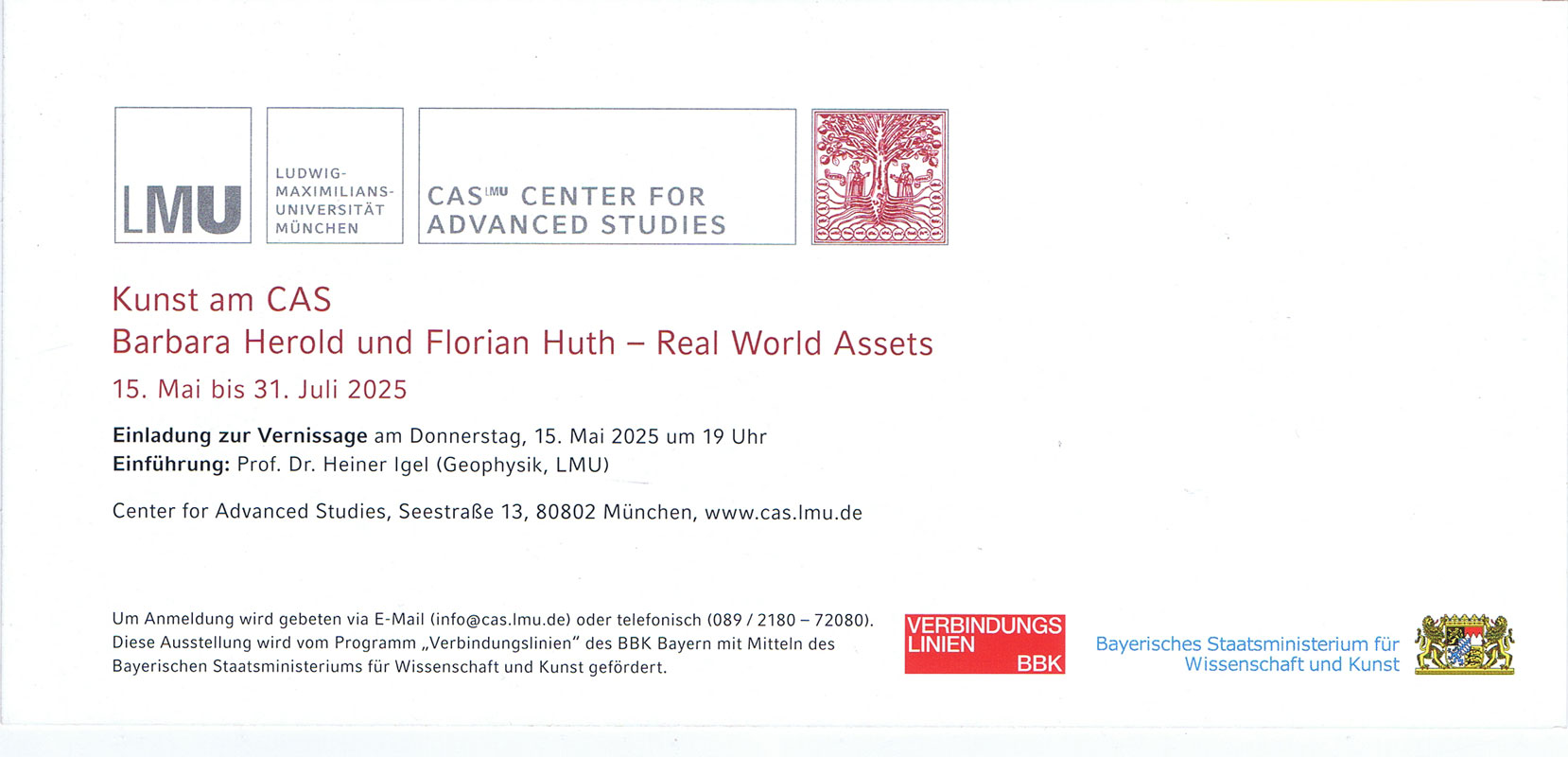
Einladung zu einer Vernissage im CAS. Ausstellung 15.05.-31.07.2025.
Das Künstler:innenduo Barbara Herold und Florian Huth erforscht seit 2013 das Spannungsfeld zwischen Natur und Künstlichkeit. Ihre Arbeiten hinterfragen Konzepte von Authentizität, Simulation und Fake in einer zunehmend digitalen, postnaturalen Welt. In ihrer Ausstellung am CAS zeigen sie grafische Serien aus dem Werkkomplex Real World Assets. Mithilfe von Vermessungs- und Bestandsaufnahmeverfahren verbinden sie dokumentarische Präzision mit einer experimentellen Bildsprache und loten so die Grenzen zwischen wissenschaftlicher Erfassung und künstlerischer Interpretation aus.
Text von der Webseite
|
Titel
-
BARBARA HEROLD FEAT. KIM TWIDDLE - PARCOUR
Technische
Angaben
-
29,7x21 cm, 4 Teile. keine weiteren Angaben vorhanden
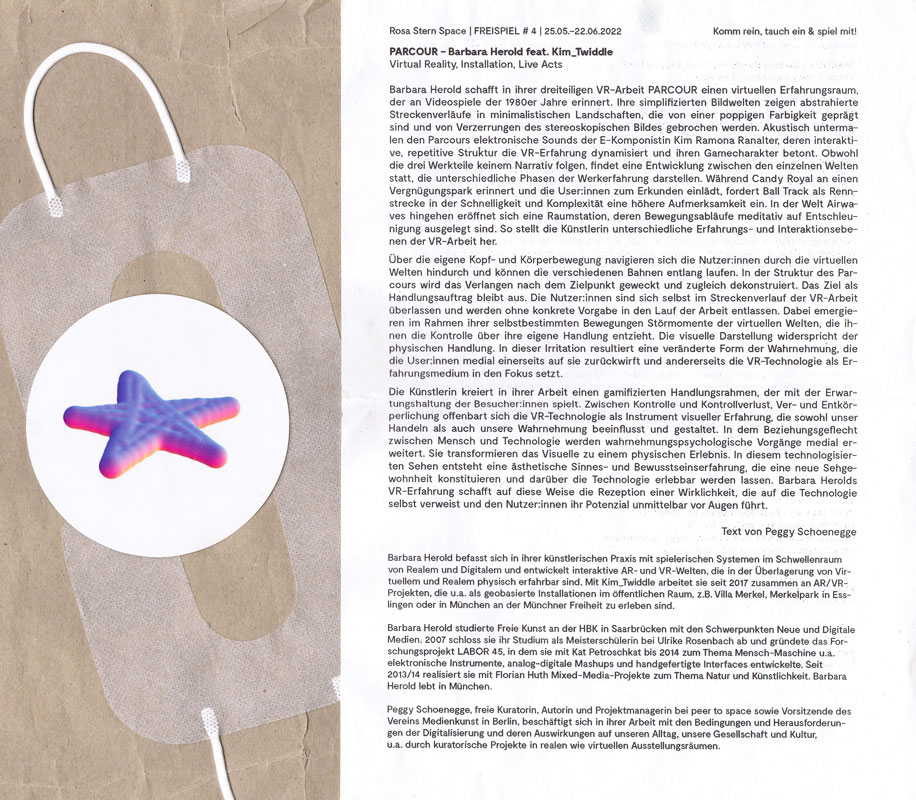
Infoblatt, Aufkleber und Hygienemaske für VR-Brille
ZusatzInfos
-
Virtual Reality, Installation und Live Acts im Rahmen von FREISPIEL im Rosa Stern Space 25.05.-22.06.2022
We are happy to announce the fourth edition of FREISPIEL: a series of short-term residencies and presentations by (inter)national artists dealing with issues of cultural orders and their aesthetic and socio-political influences in our future-driven present. Our next guests will be Munich based artists Barbara Herold feat. Kim Twiddle LIVE with the synaesthetic challenge PARCOUR – suspend traditional patterns of perception, explore visual borderline experiences and enable a new transcendental seeing while generating surreal soundscapes! In her artistic practice, Barbara Herold explores playful systems in the threshold space of the real and the digital and develops interactive AR and VR worlds that can be physically experienced in the overlapping of the virtual and the real. In collaboration with e-composer Kim Twiddle, Barbara Herold developed the colour-form-music composer PARCOUR, a VR experiment on „Neues Sehen" (according to W. Benjamin). Through optical abstraction, stereoscopic overlays and interactive sound modulation, retro video game landscapes become an aesthetic sensual and new consciousness experience.
PARCOUR will be premiered at Rosa Stern Space. The VR will be graphically extended into the physical space, accessible via a gate. Kim Twiddle will realize electronic live acts and a sound installation based on sound material generated by VR users at Rosa Stern Space and other venues – PARCOUR on tour (tba)...
Barbara Herold, VG Bild-Kunst, Bonn, 2022
Text von der Webseite
|
Technische
Angaben
-
[192] S., 23,5x23,5 cm, ISBN/ISSN 9780957261051
Fadengeheftet, Hardcover, Cover beidseitig geprägt und Banderole
ZusatzInfos
-
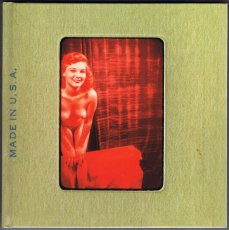
This volume is the lasting legacy of Elvgren’s slide collection. It helps us build a more complete picture of his artistic process and it offers a valuable insight into the development of glamour photography. However, the lasting impression of the collection is of a man who loved and appreciated the female form. Its real beauty and impact lies in the knowledge that one of the greatest masters of the illustrated pin-up took his inspiration from the very real flesh of womanly curves in all of their natural glory.
Text von der Website.
|
Technische
Angaben
-
40 S., 14,8x21 cm, keine weiteren Angaben vorhanden
Broschur, Digitaldruck
ZusatzInfos
-
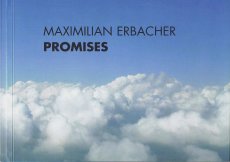
The Pepsi Challenge
Oversized ‘promises’ in the form of real estate advertisements are promoting the new city along the lines of global real estate and living standards. ‘The perfect union to all you desire’ and ‘We believe luxury is best served in small quantities’ first seen along Varthur Road in Whitefield, Bangalore, caught my attention. The second one leaves a particularly ironic, tangy, protestant-flavoured impression, seen from the German point of view.
Questions emerged about the Indian caste system, the sense of community, modesty and personal goals.
The design of this urbanity also reminds me of earlier journeys to the United Arab Emirates and Shanghai. The new urbanity becomes exchangeable, custom-tailored and its ‘ultra-luxurious villas’ accessible ‘for the chosen few’ of the Pepsi Generation.
But what happens to the majority of a city’s population and its needs, uncertain ownership and neglect of basic amenities? Can it withstand the pressure flashed on every corner of the city? Do these promises affect social cohesion? ...
Text von der Webseite
|
Titel
-
Artists' Magazines - An Alternative Space for Art
Technische
Angaben
-
368 S., 24,8x19 cm, ISBN/ISSN 9780262528412
Broschur
ZusatzInfos
-
Originalausgabe von 2011.
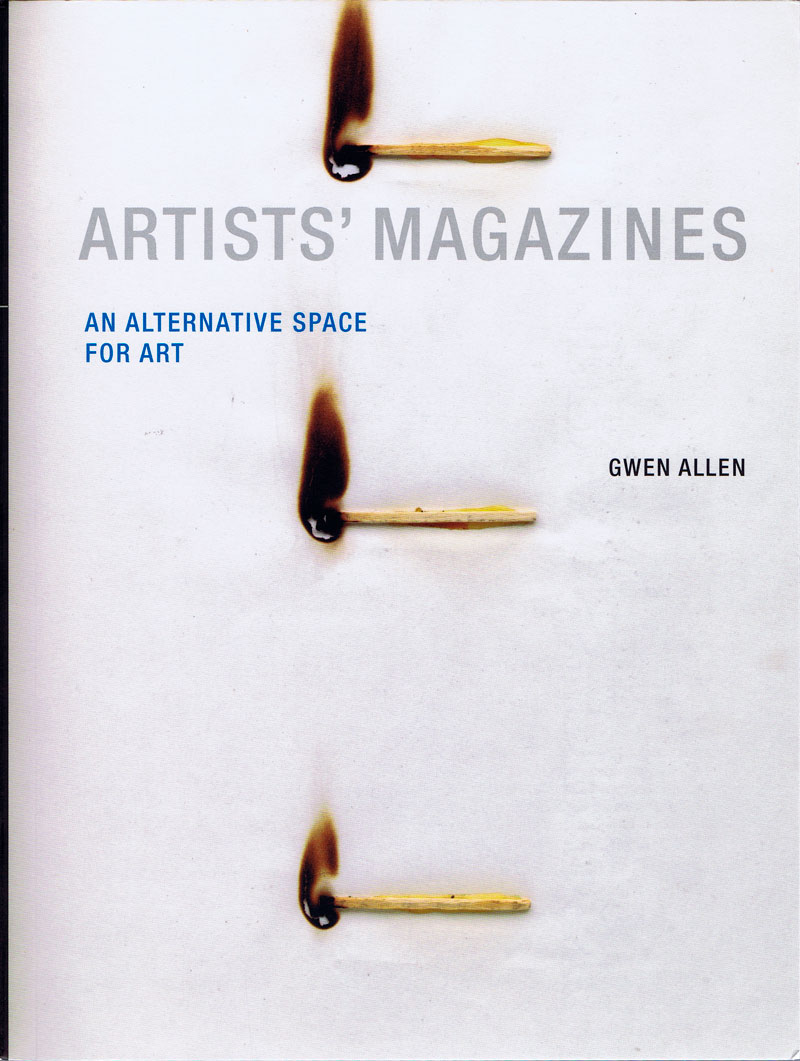
During the 1960s and 1970s, magazines became an important new site of artistic practice, functioning as an alternative exhibition space for the dematerialized practices of conceptual art. Artists created works expressly for these mass-produced, hand-editioned pages, using the ephemerality and the materiality of the magazine to challenge the conventions of both artistic medium and gallery. In Artists’ Magazines, Gwen Allen looks at the most important of these magazines in their heyday (the 1960s to the 1980s) and compiles a comprehensive, illustrated directory of hundreds of others.
Among the magazines Allen examines are Aspen (1965–1971), a multimedia magazine in a box—issues included Super-8 films, flexi-disc records, critical writings, artists’ postage stamps, and collectible chapbooks, Avalanche (1970-1976), which expressed the countercultural character of the emerging SoHo art community through its interviews and artist-designed contributions, and Real Life (1979-1994), published by Thomas Lawson and Susan Morgan as a forum for the Pictures generation. These and the other magazines Allen examines expressed their differences from mainstream media in both form and content: they cast their homemade, do-it-yourself quality against the slickness of an Artforum, and they created work that defied the formalist orthodoxy of the day. Artists’ Magazines, featuring abundant color illustrations of magazine covers and content, offers an essential guide to a little-explored medium.
In den 1960er und 1970er Jahren wurden Zeitschriften zu einem wichtigen neuen Ort der künstlerischen Praxis und fungierten als alternativer Ausstellungsraum für die entmaterialisierten Praktiken der Konzeptkunst. Künstler schufen Werke speziell für diese massenproduzierten, von Hand herausgegebenen Seiten und nutzten die Vergänglichkeit und Materialität der Zeitschriften, um die Konventionen sowohl des künstlerischen Mediums als auch der Galerie in Frage zu stellen. In Artists' Magazines befasst sich Gwen Allen mit den wichtigsten dieser Zeitschriften in ihrer Blütezeit (1960er bis 1980er Jahre) und stellt ein umfassendes, bebildertes Verzeichnis von Hunderten weiterer Zeitschriften zusammen.
Zu den von Allen untersuchten Magazinen gehören Aspen (1965-1971), ein multimediales Magazin in einer Box - die Ausgaben enthielten Super-8-Filme, Flexi-Disc-Schallplatten, kritische Schriften, Briefmarken von Künstlern und Sammelbücher, Avalanche (1970-1976), das durch seine Interviews und von Künstlern gestalteten Beiträge den gegenkulturellen Charakter der aufstrebenden Kunstszene von SoHo zum Ausdruck brachte, und Real Life (1979-1994), das von Thomas Lawson und Susan Morgan als Forum für die Generation Pictures herausgegeben wurde. Diese und die anderen von Allen untersuchten Magazine unterschieden sich in Form und Inhalt von den Mainstream-Medien: Sie stellten ihre hausgemachte Do-it-yourself-Qualität der Glätte eines Artforums gegenüber und schufen Arbeiten, die sich der formalistischen Orthodoxie der Zeit widersetzten. Artists' Magazines, mit zahlreichen Farbabbildungen von Titelseiten und Inhalten, bietet einen unverzichtbaren Leitfaden für ein wenig erforschtes Medium.
Übersetzt mit www.DeepL.com/Translator, Text von der Webseite
Erwähnt werden neben vorwiegend amerikanischen Magazinen auch europäische Magazine
|
Titel
-
real names - grafische werke
Technische
Angaben
-
2 S., 10,5x14,8 cm, keine weiteren Angaben vorhanden
Einladungskarte zur Ausstellung Jour Fix 144
ZusatzInfos
-
Ausstellung 22.04-13.05.2016. Im April präsentiert 84 GHz den estnischen Künstler Raul Meel. Meel zählt, wie der Komponist Arvo Pärt, zur Avantgarde der estnischen Kunst. In den 60er Jahren mit seinen Arbeiten von Konkreter Poesie bekannt geworden, setzt sich sein Werk bis heute in Malerei, Grafik und Poesie fort.
Sein Schaffen beruht auf dem Prinzip von strenger Serialität und Ordnung und ist von einer logischen Askese geprägt. Meels Werke finden sich in internationalen Sammlungen wie dem Guggenheim Museum oder dem MoMa in New York. Mit der Ausstellung real names setzt er Poesie in eine visuell strukturierte Form um und analysiert sie dabei mit Witz und Humor.
Text von der Verlagswebseite
|
Technische
Angaben
-
14,8x10,5 cm, keine weiteren Angaben vorhanden
Ausdurck oder Farbkopie A6
ZusatzInfos
-
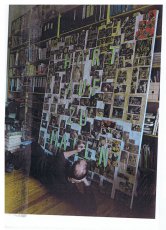
Auf Vorderseite Foto des Künstlers beim Malen des Satzes: "Hört auf zu malen". Im Hintergrund Fotos von Katzen. Auf der Rückseite Satz "Obviousy, the painting of a person is not a real person, but the painting of a sentence is a real sentence." Michalis Pichler
|
Titel
-
Theaterprojekt VII: Real Real - eine abstrakte Biographie - Stück für drei Spieler
Technische
Angaben
-
41,8x29,5 cm, keine weiteren Angaben vorhanden
ZusatzInfos
-
Aufführung am 23.06.1985 um 20 Uhr am Lion-Feuchtwanger-Gymnasium vom Kulturverein Milbertshofen organisiert.
|
Titel
-
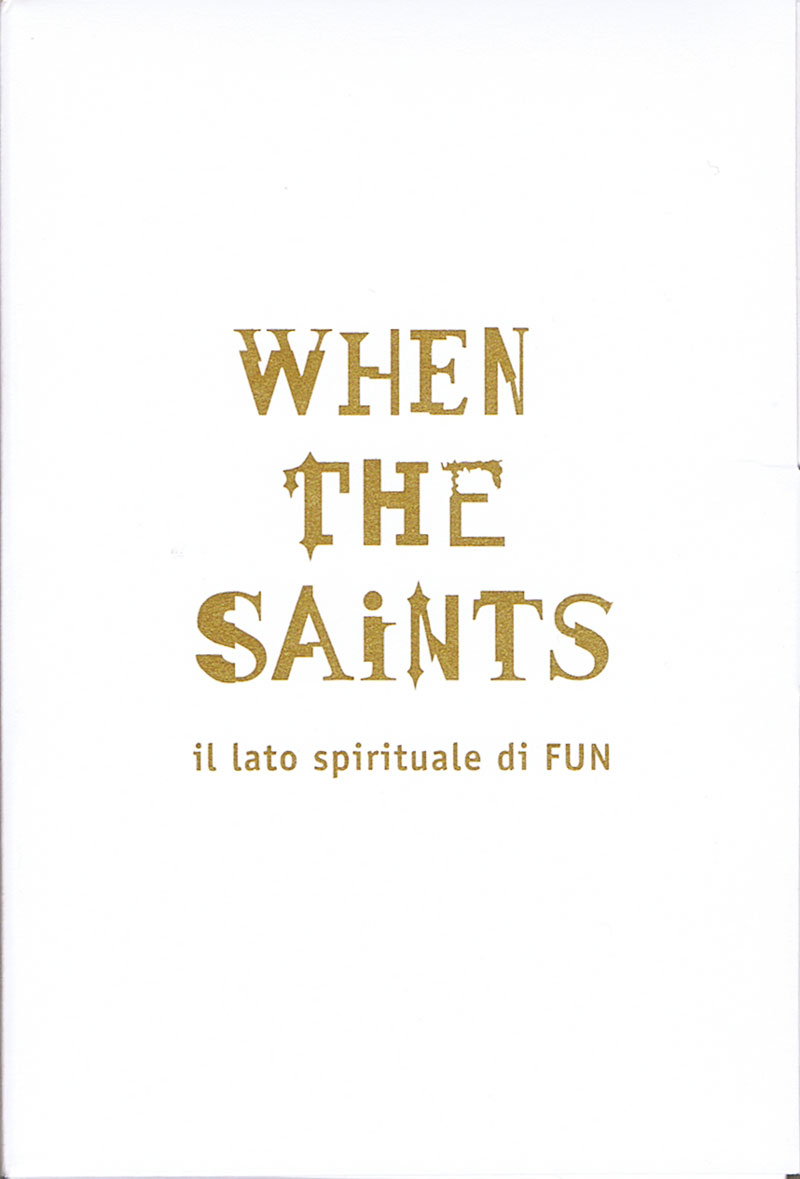
When the Saints - il lato spirituale di FUN
Technische
Angaben
-
10,8x7,3 cm, keine weiteren Angaben vorhanden
weisse Faltschachtel, golden bedruckt, darin ein einfarbig violett gedrucktes 16 seitiges Booklet (drahtgeheftet) und 36 beidseitig farbig bedruckte Karten 10,5x7
ZusatzInfos
-
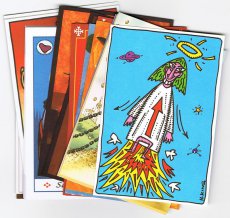
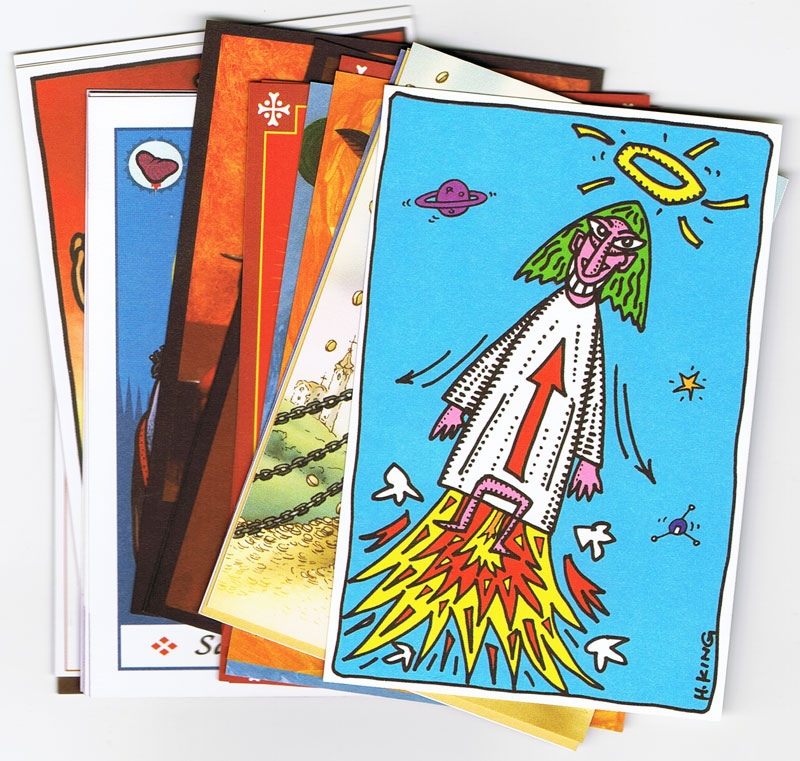
a colour box set with 36 alternative saints of the FUNtastic Nations by international authors (Giacon, Ruijters, Zattera, Chiarotto, Staffa, King, Echaurren, Biancuzzi, etc.) plus 16 pp booklet.
F.U.N. (Funtastic United Nations) is an independent and supranational organization that intends to stimulate a cooperation amongst all kinds of imaginary countries and worlds, coordinating meetings, publications, exhibitions and events. We offer our skills and resources to create a bridge between creative and funtastic geographical entities, representing numberless and mutable virtual countries, multiethnical and transgender, where the passports, postage stamps and banknotes are real but not the wars.
F.U.N.’s vocation to interact in an horizontal “networking” attitude with local and distant, real and imaginary situations, to create unexpected interferences between art and daily life, is a strategy aimed at preserving the biodiversity of cultures and encouraging an eco-friendly, free and open participation to the creative experience. F.U.N. is the logic evolution of over twenty years of networking activities in the fields of mail art, of independent music (The Great Complotto, Le Forbici di Manitù), of collective multimedia projects (Trax), of multiple names (Lieutenant Murnau, Mind Invaders, Luther Blissett), of imaginary worlds and characters (Stickerman-Stickerland) and of counter-cultural documentation (various fanzines, AAA Editions).
Text von der Webseite
|
Titel
-
Life after humanism, Photo/Text 1988-1992
Technische
Angaben
-
192 S., 30x24,3 cm, 2 Stück. ISBN/ISSN 3893224688
Softcover, Klappbroschur
ZusatzInfos
-
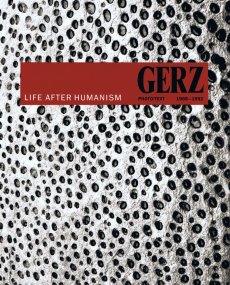
Gerz entwickelt seine Arbeit in den verschiedenen Gestaltformen von Fotos/Texten, Performances, Video- und Rauminstallationen nicht als Ergebnis eines abgeschlossenen Denkprozesses, sondern als ein nach vorne gerichtetes Experimentierfeld für Erfahrung und Wahrnehmung des existentiell Wirklichen. Er verbindet mehrere Bildteile zu einem Kontext. Die Fotografie als Medium der Reproduktion von Realität steht ebenso wie das Abgebildete für den Zeitbegriff und das Bewußtsein von Raum. Was ist real, was fiktiv, was glaubwürdig in Bezug auf das eigene Selbst. Für Gerz erfolgt jede Äußerung in einem Kontext und ist unaufhebbar auf diesen Kontext bezogen. Es geht ihm um die Kritik des bisherhigen Werkbegriffes, um das Bewußtsein von raumzeitlicher Begrenztheit. Die Kunst ist gehalten, sich als Äußerung im Kontext zu reformieren.
Text von der Webseite
|
Technische
Angaben
-
signiert, keine weiteren Angaben vorhanden
5 Klappkarten in Umschlag, mit Widmung
|
Titel
-
In Dust Real / Daemon o logic
Technische
Angaben
-
numeriert, signiert, keine weiteren Angaben vorhanden
fotokopierte Blätter, Cover und Rückseite Titel gesprüht, Collage
|
Titel
-
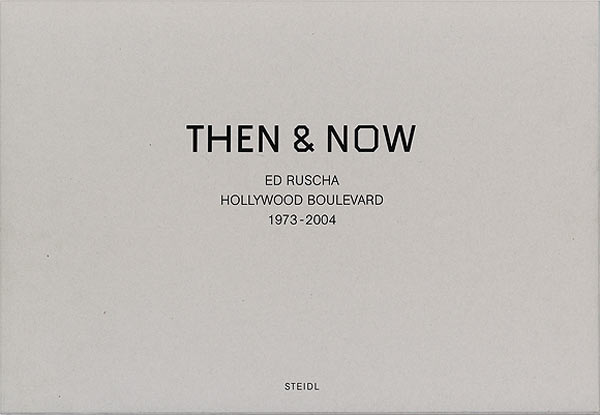
Then & Now - Hollywood Boulevard 1973-2004
Technische
Angaben
-
152 S., 44,7x32,5 cm, ISBN/ISSN 9783865211057
Hardcover, Leineneinband im Schuber,
ZusatzInfos
-
One of the most well-known of Ruscha's books from his early period is Every Building on The Sunset Strip, showing a famous stretch of real estate along Sunset Boulevard in Los Angeles, published in 1966. In July, 1973 he followed the same procedure while documenting Hollywood Boulevard.
Loading a continuous strip of 33 feet of Ilford FP-4 black & white 35mm film into his motor-drive Nikon F2 and then mounting it on a tripod in the bed of a pickup truck, he drove back and forth across the 12 miles of the street shooting, frame-by-frame, both the north and south sides of its entire length. The negatives were developed, contact sheets were made, and the materials were placed in storage.
Thirty years later, in 2003, a digital record of Hollywood Boulevard was created and it served as a reference guide for the traditional film/still documentary of 2004. For this shoot, the same type of camera equipment was used to re-photograph the street on 35mm color-negative film.
The resulting material of both shoots — 4500 black & white and 13,000 color images — have been scanned and digitally composed into four panoramics of the complete 12 miles. In THEN & NOW, the original 1973 North side view is shown along the top of the page and juxtaposed with its 2004 version underneath. Along the bottom of the page, you find the original 1973 South side view shown upside down, also juxtaposed with its 2004 version. The panoramics face each other and they are aligned.
Text von der Webseite
|
Titel
-
Experimentelle Poesie - Retrospektive aus 15 Jahren
Technische
Angaben
-
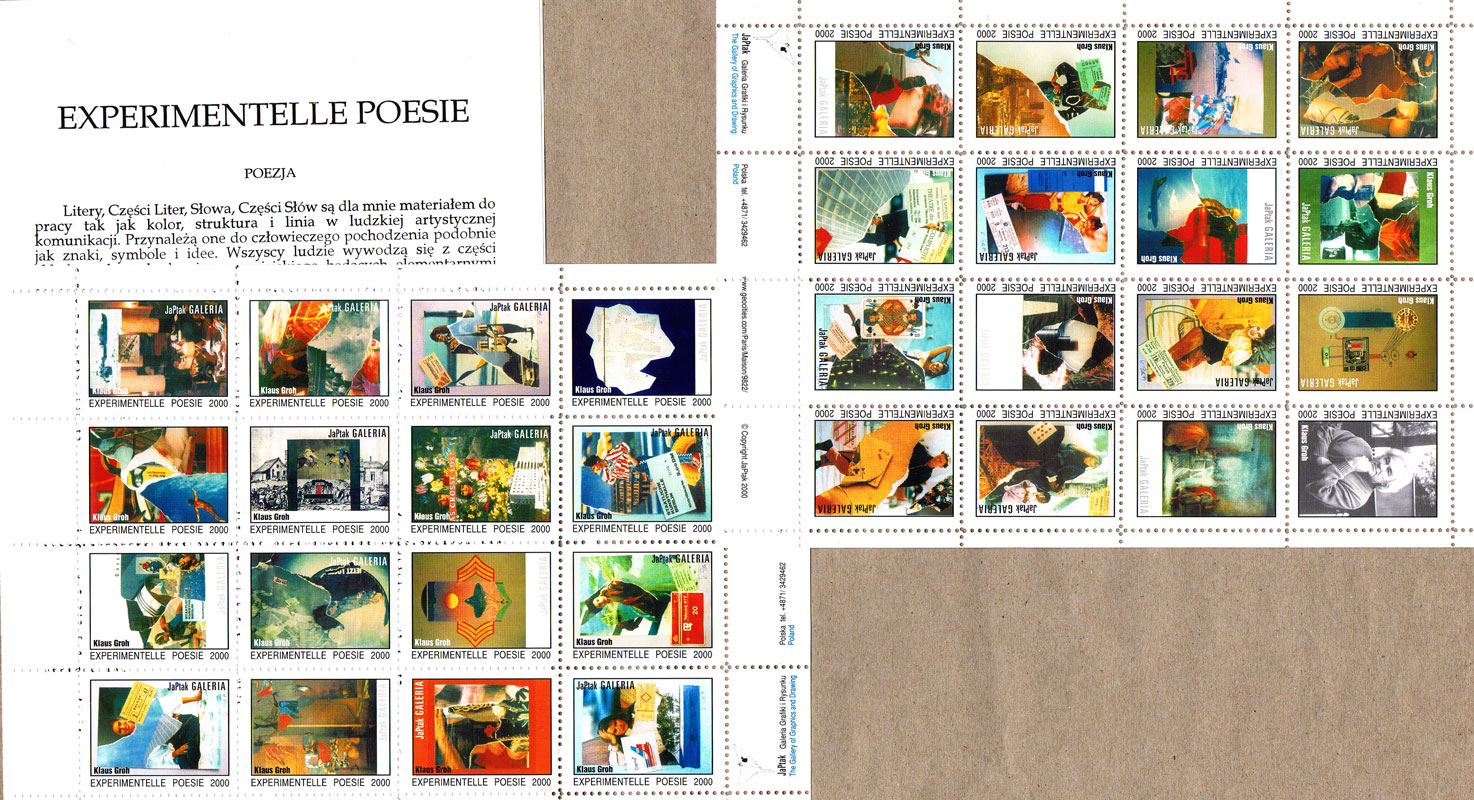
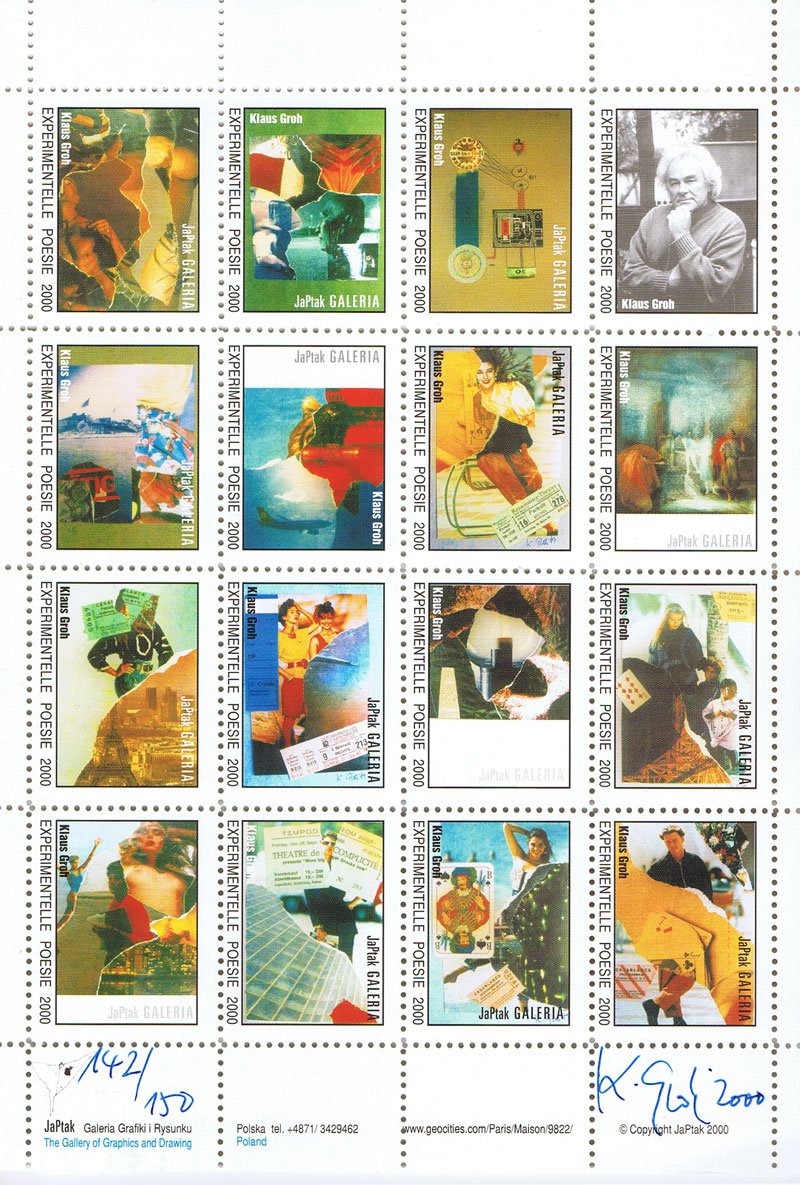
[4] S., 21x14,5 cm, Auflage: 150, numeriert, signiert, 131 Teile. keine weiteren Angaben vorhanden
Drei Flyer, einmal gefaltet, acht Bogen Künstlerbriefmarken, perforiert. Zwei Bögen signiert und nummeriert.
ZusatzInfos
-
Zur Ausstellung Experimentelle Poesie, 13.04.-13.05.2000 in der Japtak Galerie, Breslau. Letters, Parts of Letters, Words, Parts of Words are working materials for me like color, structures and lines for human artistic communications. They belong to human origin like signs, symbols and ideas. I try with these elementary materials of human communication to create happenings of reading and discovering new thoughts in mind, real and life. It is a permanent dialog between material, thoughts and discovering new ideas and structures.
Text vom Flyer.
|
Titel
-
IAC. Ed. Nr. 19 - Real Klassnik
Technische
Angaben
-
[20] S., 10,5x7,4 cm, Auflage: 80, numeriert, 2 Stück. keine weiteren Angaben vorhanden
Drahtheftung, farbiges Cover, beidseitig gestempelt
ZusatzInfos
-
Ein Exemplar mit Cover von Ausgabe 05.
|
Titel
-
Experimentelle Poesie 2000
Technische
Angaben
-
[4] S., 21x14,5 cm, Auflage: 150, numeriert, signiert, 48 Teile. keine weiteren Angaben vorhanden
Bogen Künstlerbriefmarken, perforiert
ZusatzInfos
-
Erschienen zur Ausstellung Experimentelle Poesie, 13.04.-13.05.2000 in der Japtak Galerie, Breslau. Letters, Parts of Letters, Words, Parts of Words are working materials for me like color, structures and lines for human artistic communications. They belong to human origin like signs, symbols and ideas. I try with these elementary materials of human communication to create happenings of reading and discovering new thoughts in mind, real and life. It is a permanent dialog between material, thoughts and discovering new ideas and structures.
Text vom Flyer.
|
Titel
-
Real Shocks Return No. 12
Technische
Angaben
-
[10] S., 21x14,8 cm, keine weiteren Angaben vorhanden
Blätter lose ineinander gelegt, Schwarz-Weiß Kopien
|